Scalable Cross-business-unit Search Design
Designed a data-driven search framework that adapts to Cross-business-unit needs to drive conversions
Business Context
Context
JD.com's Search Results Page is a critical product module:
Major traffic entry point: Most users arrive with clear shopping intent
Primary conversion path: Majority of purchases happen through search
High business impact: Significant contributor to total GMV, Serves millions of daily active users
The Opportunity
Business units (Auto Parts, Pharmaceuticals) requested search improvements to support their growing operations. Combined with platform-wide efforts to optimize conversion rates, this presented a clear opportunity to enhance the search experience for specific categories and peak shopping periods.
The Challenge
JD.com's search results page serves 150M+ daily users across 20+ business units — but struggled to balance:
Unified UX
VS.
Category-specific needs
Data-driven design
VS.
Stakeholder preferences
Design consistency
VS.
Seasonal flexibility
Team
Product Manager
Lead UX Designer

UX Designer
UI Designer
Business Units
Skills
Strategic Problem-Solving
Data-driven Design
Cross-Functional Communication
Designing Scalable System
Outcome
Validate the positive impact of iterations through UCTR and UCVR values
Timeline
2023 Q3
Module
Search
Tool
Figma
Framework & Constraints
JD's search page follows a "intent progression" model (developed based on extensive data analysis and behavioral insights) — as users scroll, content becomes more targeted based on behavior data.
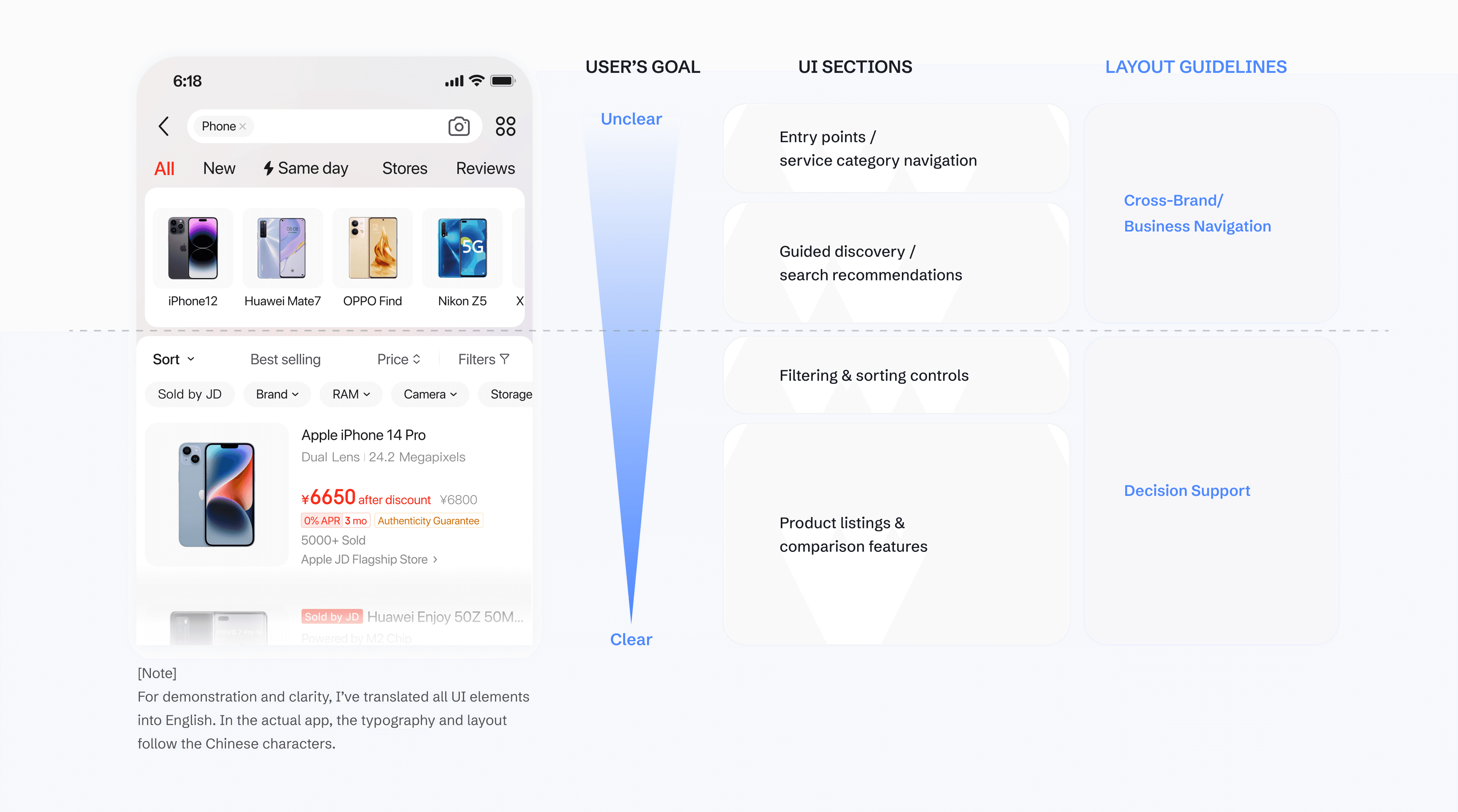
My design mandate: Work within this existing framework and optimize at component level—not rebuild the page structure—in order to maintain consistency across experiences.
This constraint shaped my approach by focusing on modular, flexible components that could adapt to different needs while respecting the proven framework architecture.
With this foundation established, the next step was determining where to focus design efforts for maximum impact.
Scope & Design Approach
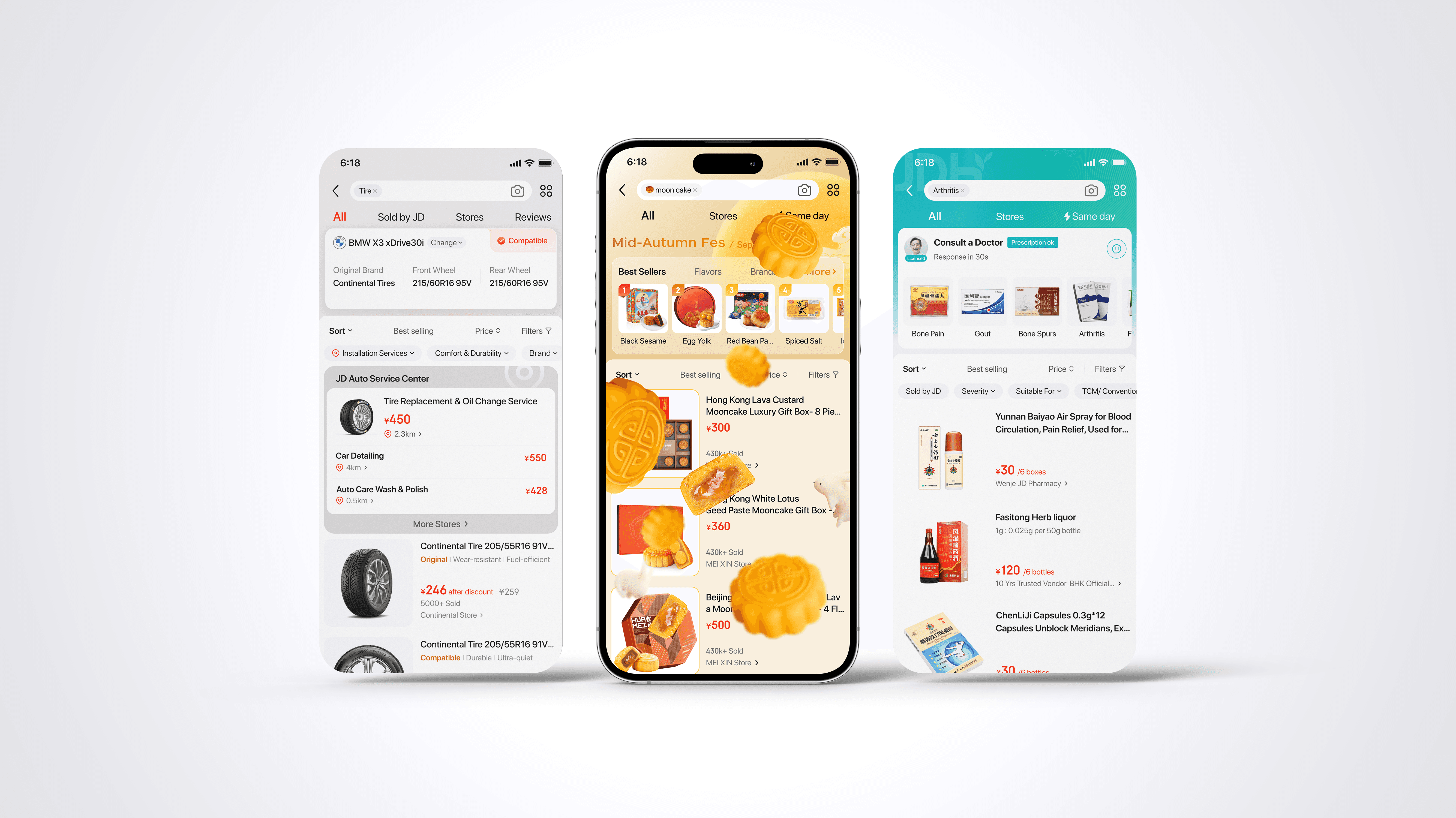
Product team identified two high-impact opportunity areas based on business unit requests and search volume data. Working within the framework constraint, I structured the design approach into two parallel tracks—each requiring different methodologies due to their distinct problem characteristics:
Scope
Track 1: Category-Specific

Auto Parts
Pharmaceuticals
Track 2: Promotion-Specific
Holidays & Festivals
E-commerce Promos
Design Approach
Cross-functional qualitative research
Method:
1. Stakeholder Alignment
2. Category Deep-Dive
3. User Validation
→ Goal:
Design component variants tailored to category-specific needs
Data-driven behavior analysis
Method:
1. Historical Data Review
2. Behavioral Insight Mining
3. Content Strategy Alignment
→ Goal:
Create dynamic systems that adapt to temporal contexts
Design Principles
Modular
Component-level flexibility
Consistent
Shared design language
Data-backed
Every decision validated
Testable
A/B test before full launch
Design Solutions
Auto Parts
INSIGHTS
1
Pre-Purchase
Finding Compatible Parts
Challenge:
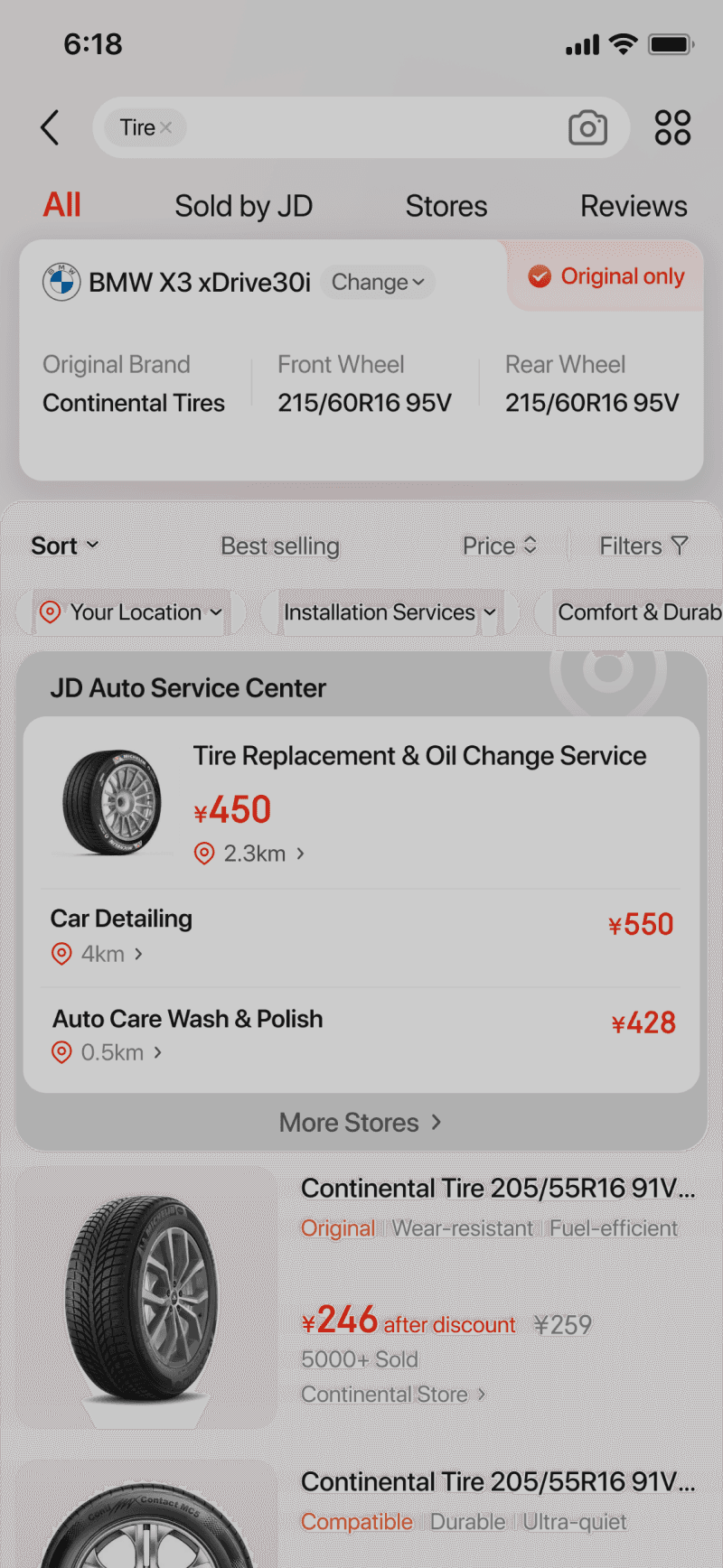
To search for compatible parts, users must first input their vehicle model. Current flow requires selecting through multiple pages: Brand → Series → Year → Model
What we found:
Users find this tedious and give up
"Too many steps, I’d rather browse first."
High drop-off at vehicle selection stage
2
Mid-Purchase
Understanding Product Options
Challenge:
Data analysis revealed two distinct user types with different needs:
Type 1: OEM-only buyers (brand-conscious)
Only trust original factory parts
Problem: Hard to identify genuine OEM products
Often confused by aftermarket alternatives
Type 2: Spec-matching buyers (price-conscious)
Want cheaper options that fit their vehicle
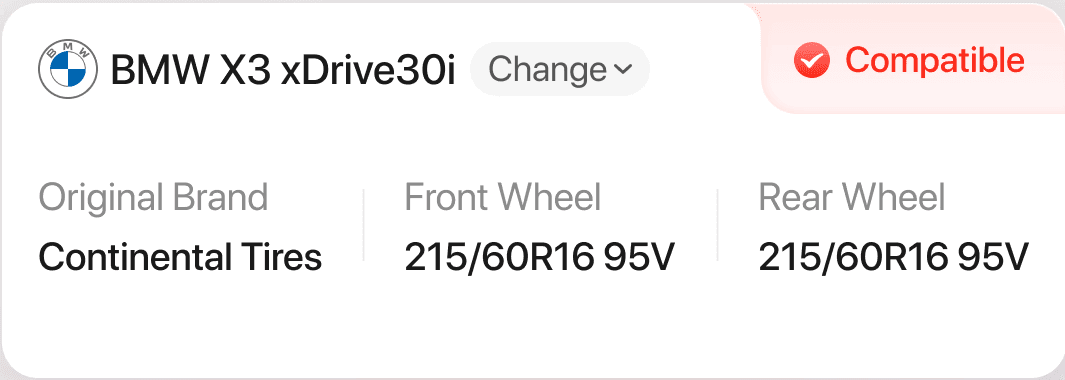
Problem: Don't understand specification numbers e.g., tire spec "215/60R16 95V"
3
Post-Purchase
Service Integration
Challenge:
After purchase, users need installation services:
Most auto parts require professional installation
Users don't know where to go
Business opportunity:
JD Auto BU operates offline service center chains
These centers needed more exposure
Opportunity to create one-stop experience
Solutions
1
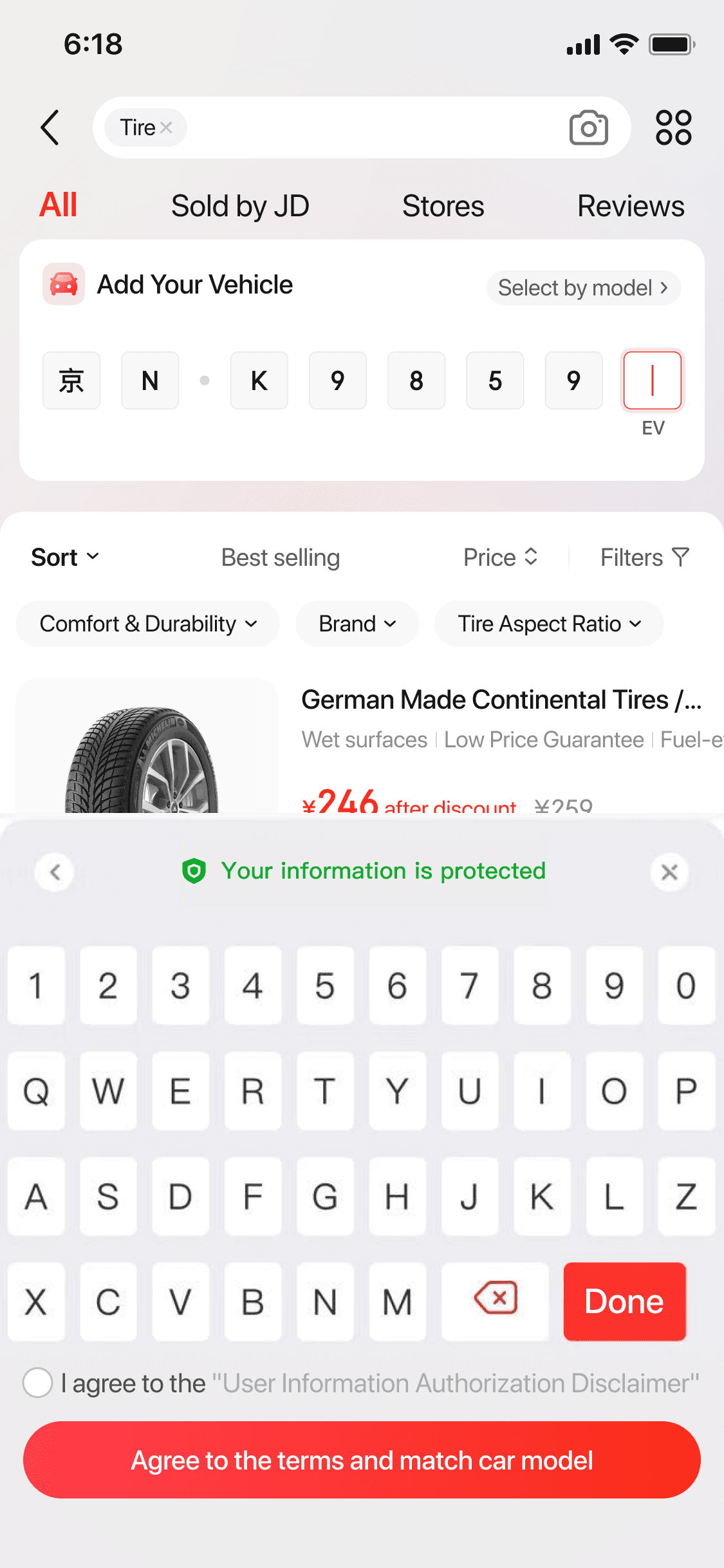
License Plate Auto-Detect
Users enter their license plate → the system auto-fills the vehicle model
One tap to filter compatible parts
Save vehicle for future searches
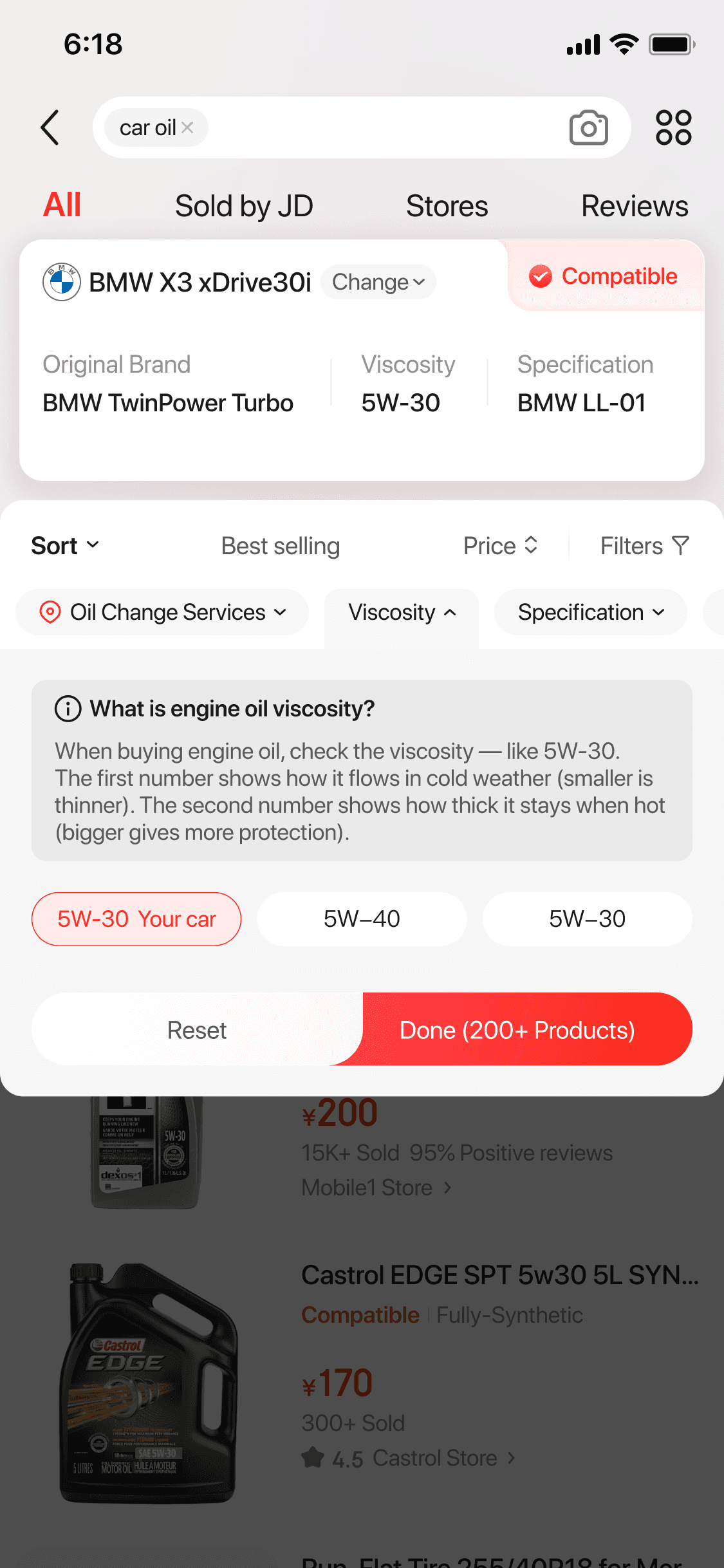
Filter Compatible Parts Only
Original Brand and Sepc
Spec decoder
“OEM” and “Compatible” Label
2
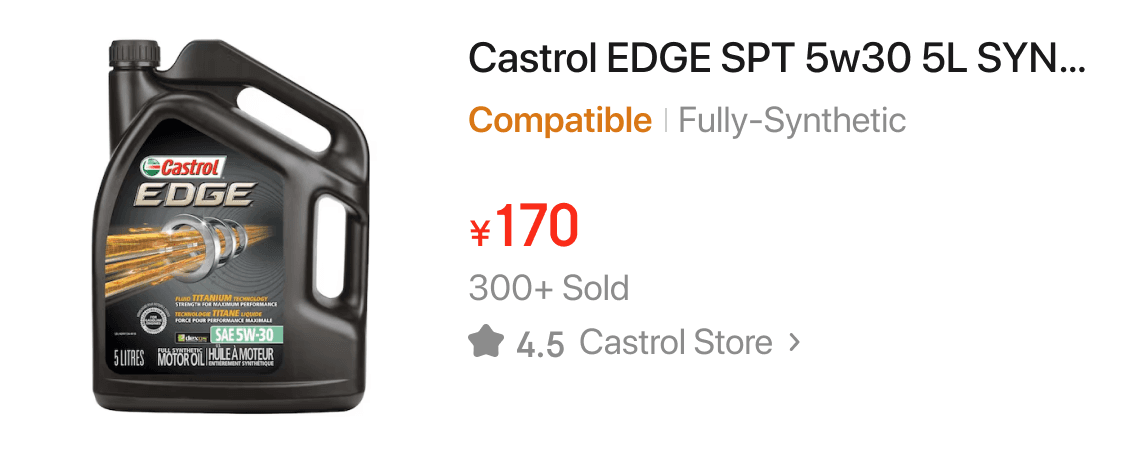
OEM Labels & Specification Decoder
For OEM buyers:
Clear "Original" tags
"Original only" filter option
For Spec-matching buyers:
Spec decoder
"Compatible" tags
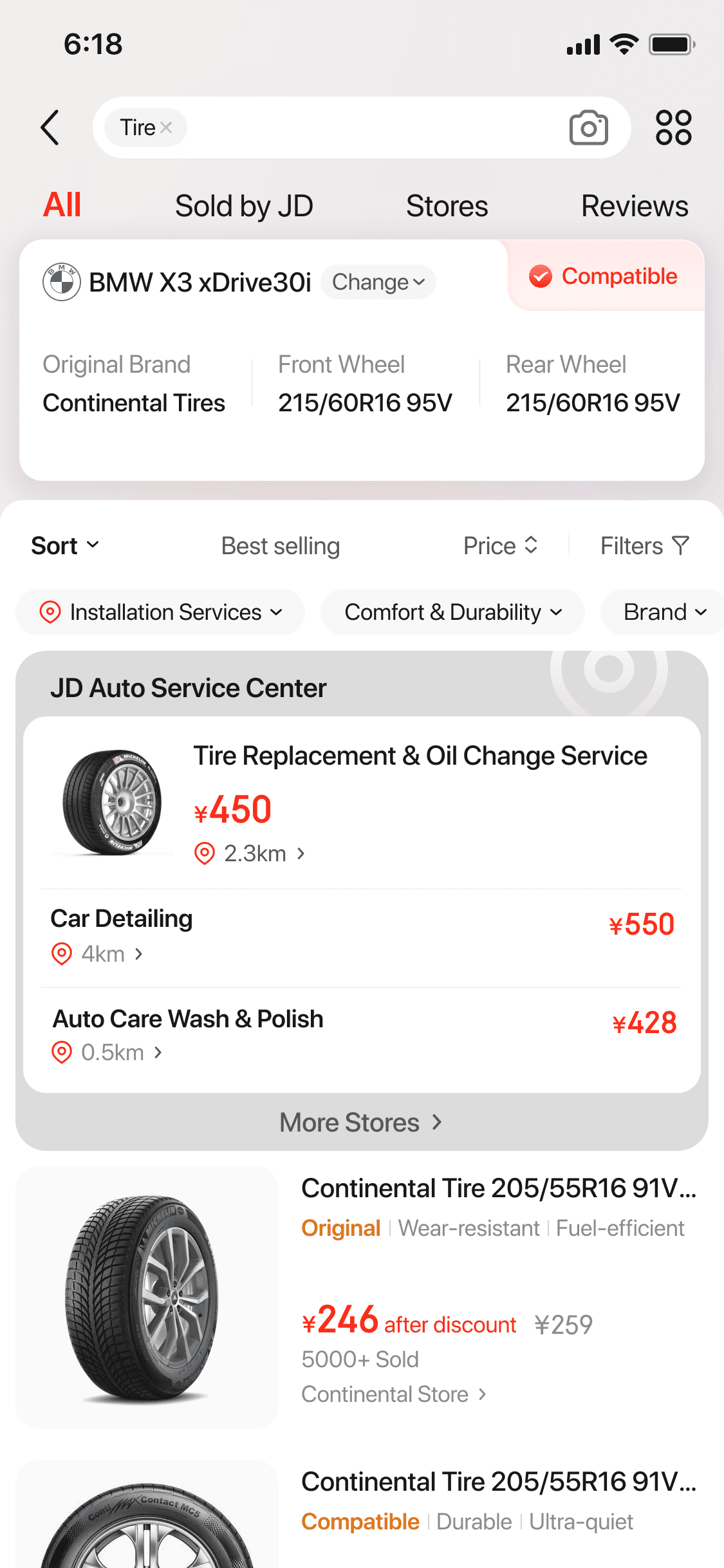
O2O Bundled offers
3
O2O Service Integration
"Product + Installation" bundled offers
Nearby JD service center locator
Service promotions in search results
Pharmaceuticals
INSIGHTS
1
Unclear Needs
Finding the Right Medication
Challenge:
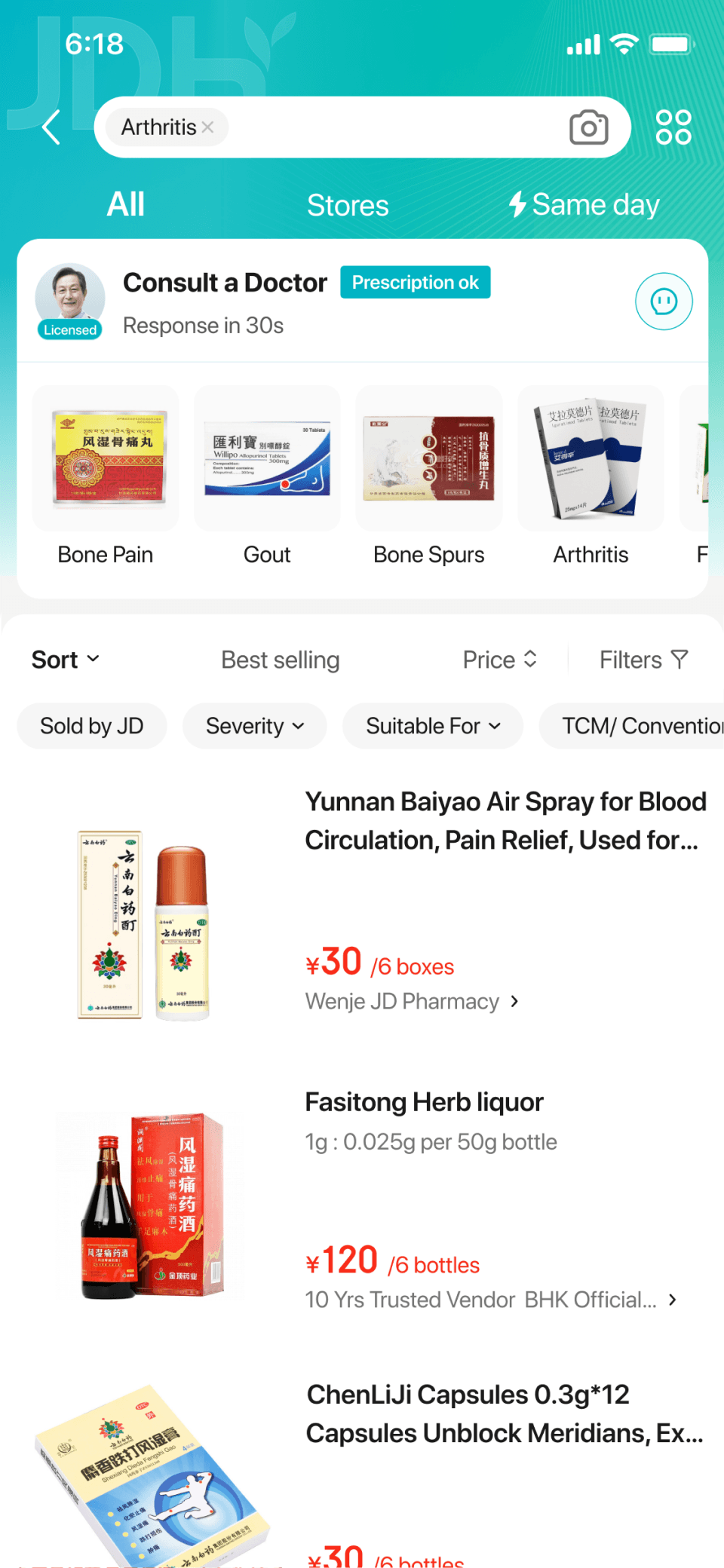
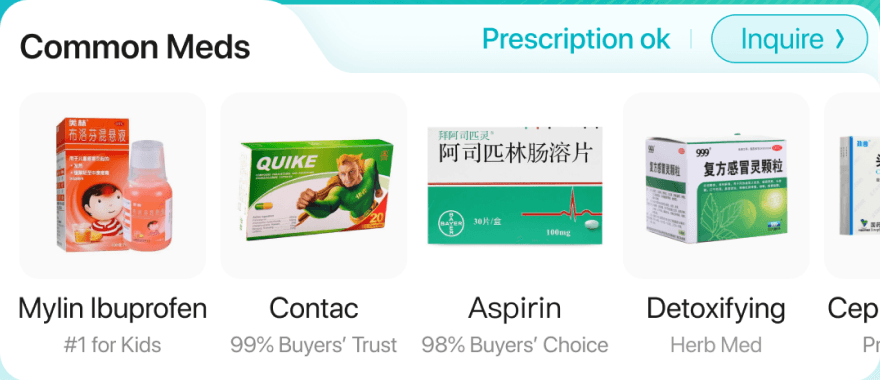
Search data revealed users rarely search by drug names. Instead, they search by their health needs:
Scenario 1: Symptom-based searches
"arthritis"
User doesn't know specific diagnosis
Needs guidance on which medication to choose
Scenario 2: Condition-based searches
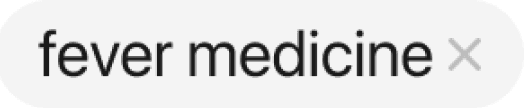
"fever medicine"
Clearer diagnosis, comparing options
Needs to understand different treatments
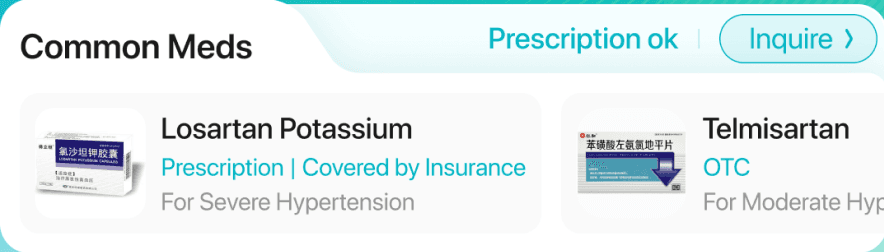
Scenario 3: Chronic medication needs
"blood pressure medicine"
Regular purchaser, knows what they need
Focuses on price and repurchase convenience
2
Unclear Needs
Needing Expert Guidance
Challenge:
Many users are uncertain about:
What's causing their symptoms
Which medication is appropriate
Whether they need professional advice
Business opportunity:
JD Pharma partners with hospitals
Offers online doctor consultation services
Service had low awareness and utilization
User quote:
"Usually when I go to the pharmacy, the pharmacist will recommend one or two medicines based on my symptoms, weight, and health conditions. I rarely go in already knowing which specific drug name to buy."
3
Clear Needs
Delivery Speed & Quality Concerns
Challenge:
Two very different purchase behaviors:
Urgent, one-time needs:
Acute illness (fever, pain, cold)
"I need it NOW"
Primary concern: delivery speed
Less price sensitive
Chronic, repeated purchases:
Daily medication (blood pressure, diabetes)
"I need to stock up"
Primary concerns: unit price, bulk discounts
Will wait for better deals
Solutions
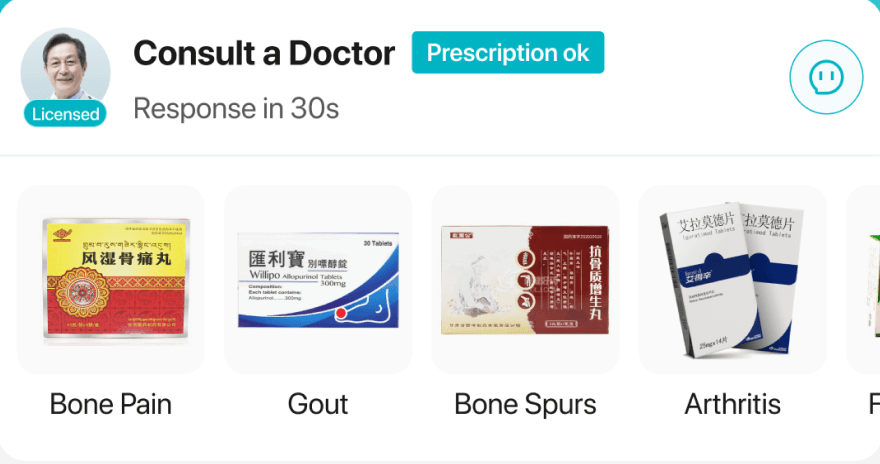
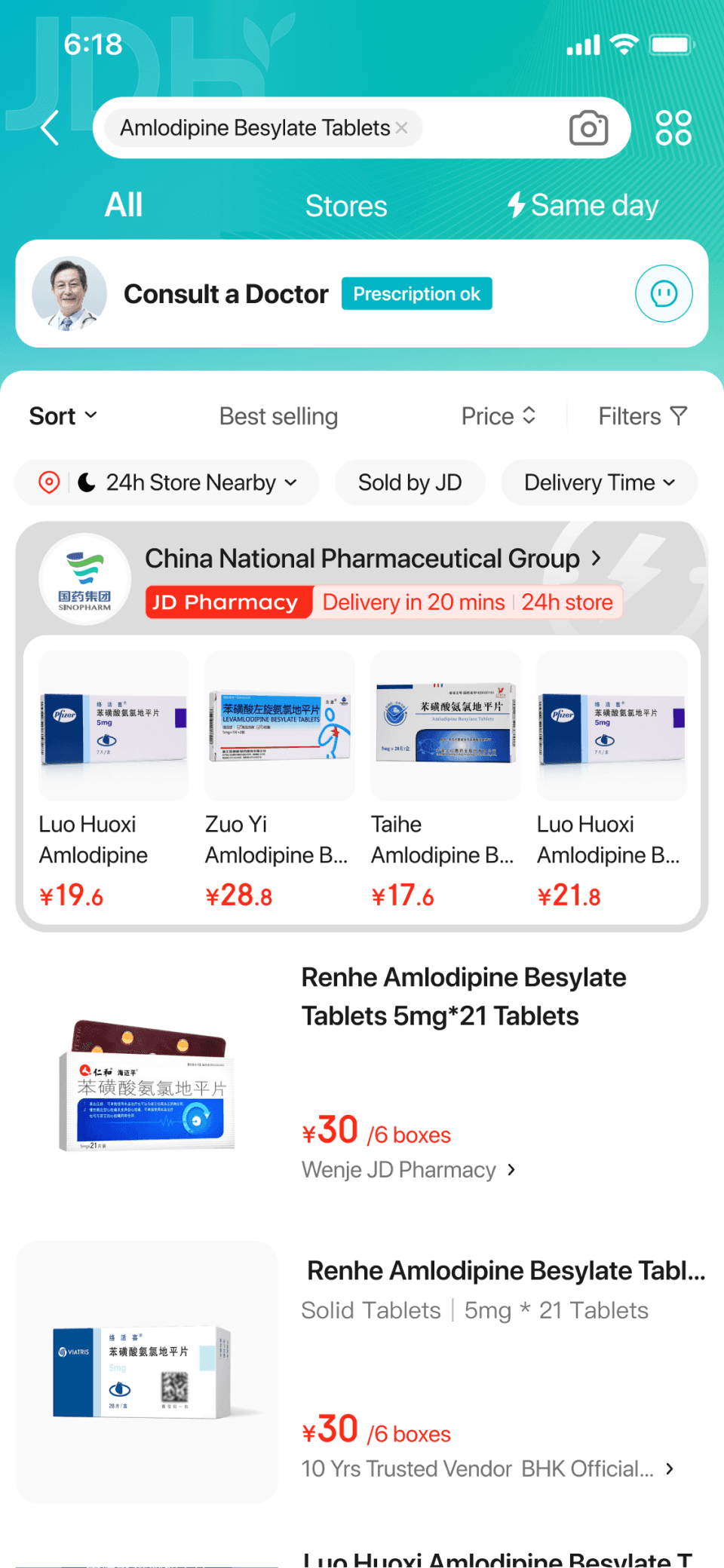
1: Symptom-based searches
Subcategories based on symptoms + “Ask a Pharmacist” support.
Doctor Q&A
2: Condition-based searches
Medications for common illnesses + product effects and best-sellers.
3: Chronic medication needs
Targeted meds + dosage guidance + ingredients + long-term treatment options

1
2
Context-Aware Recommendations & Integrated Doctor Q&A
For acute medications
For chronic medications
3
Adaptive Information Hierarchy
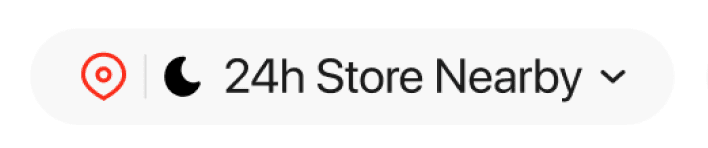
Nearby Pharmacies
Holidays & Festivals
Surge Demand
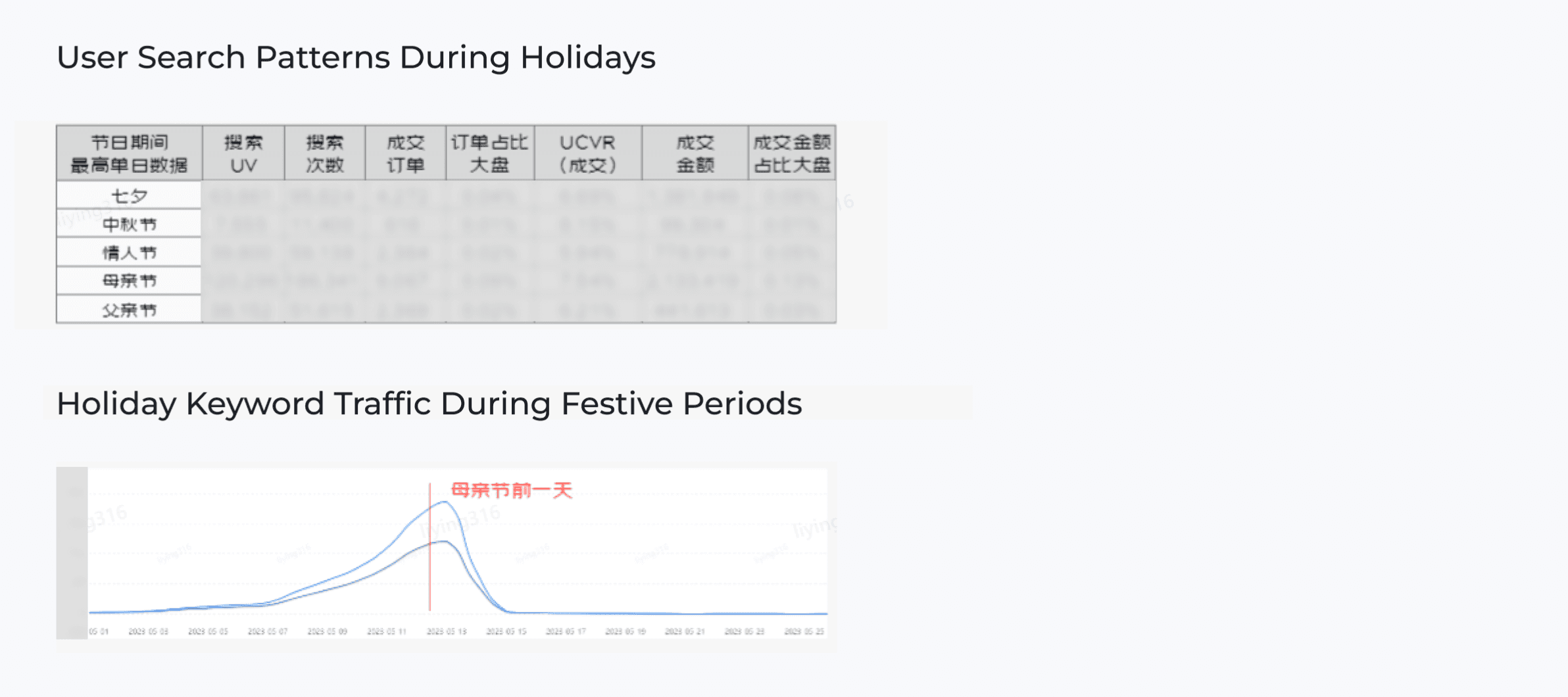
Spike in Contextual Keywords Search
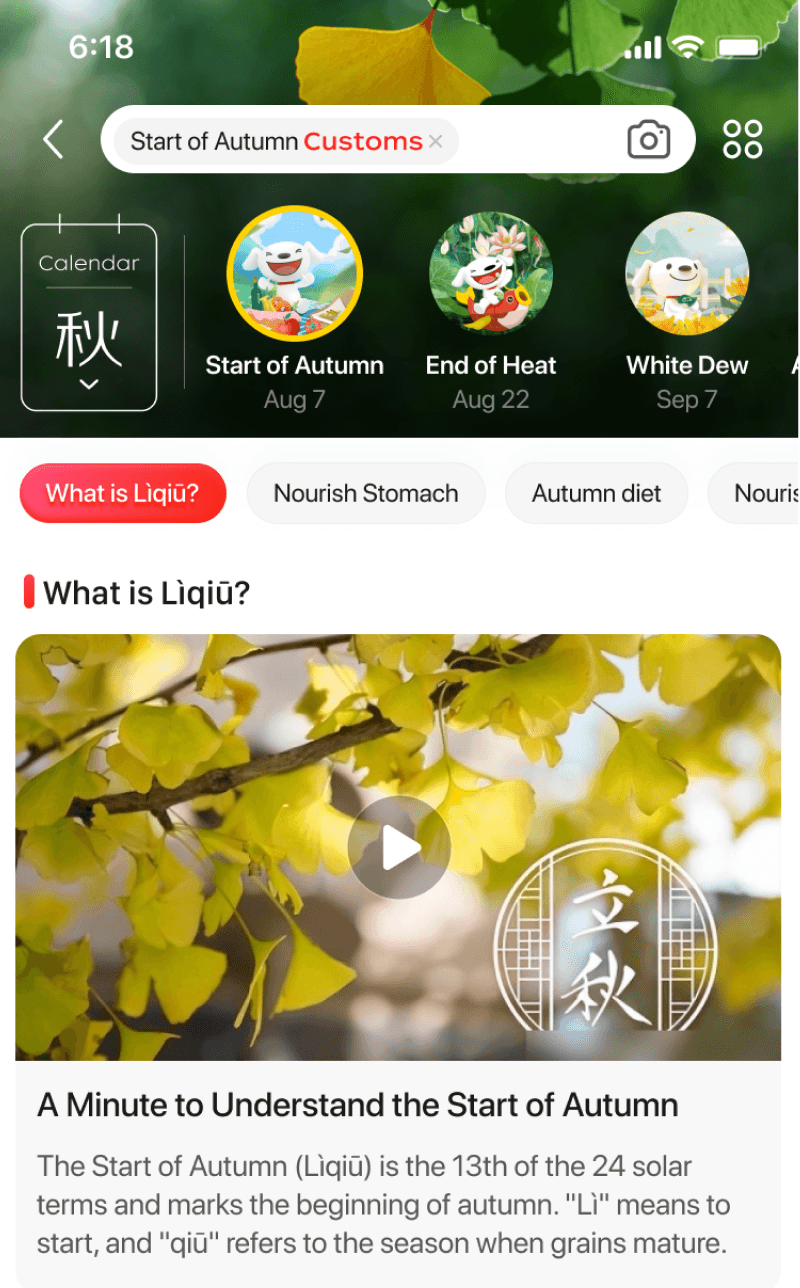
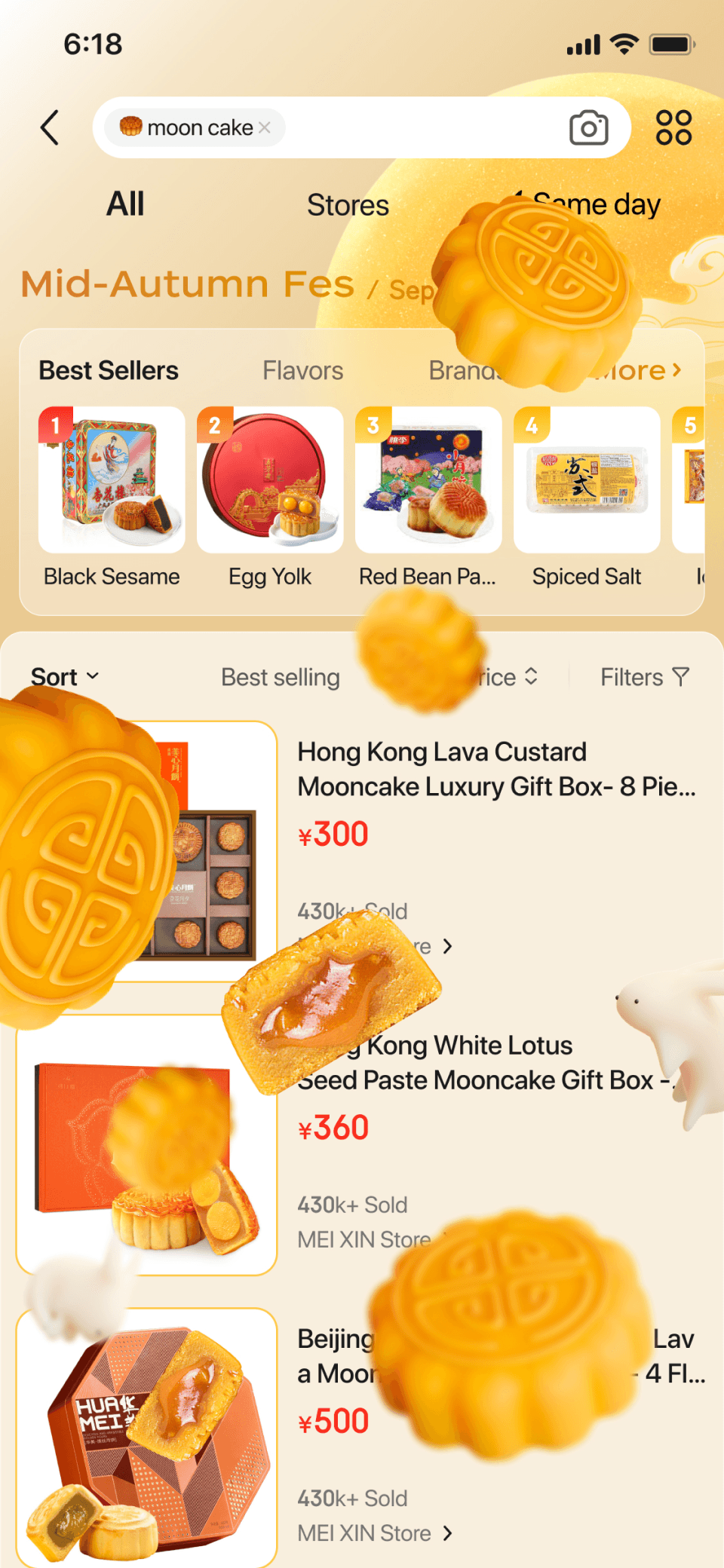
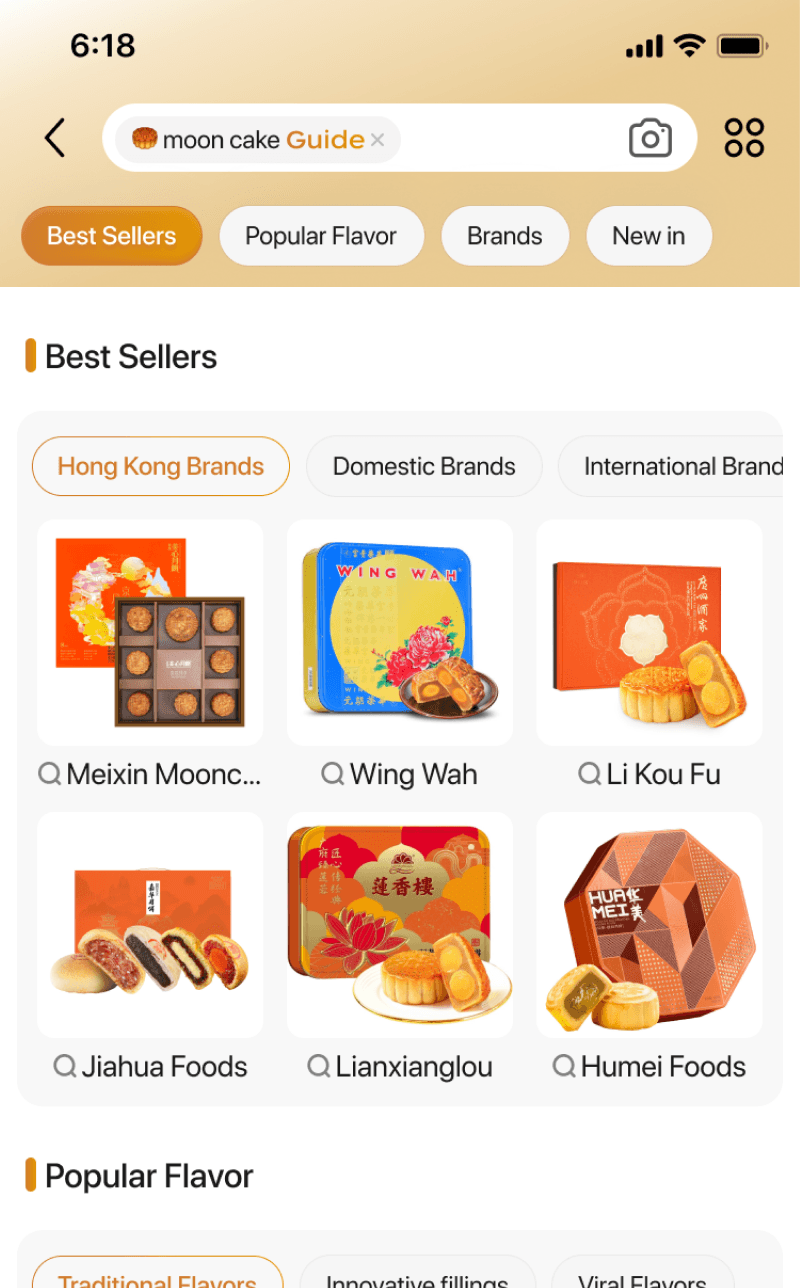
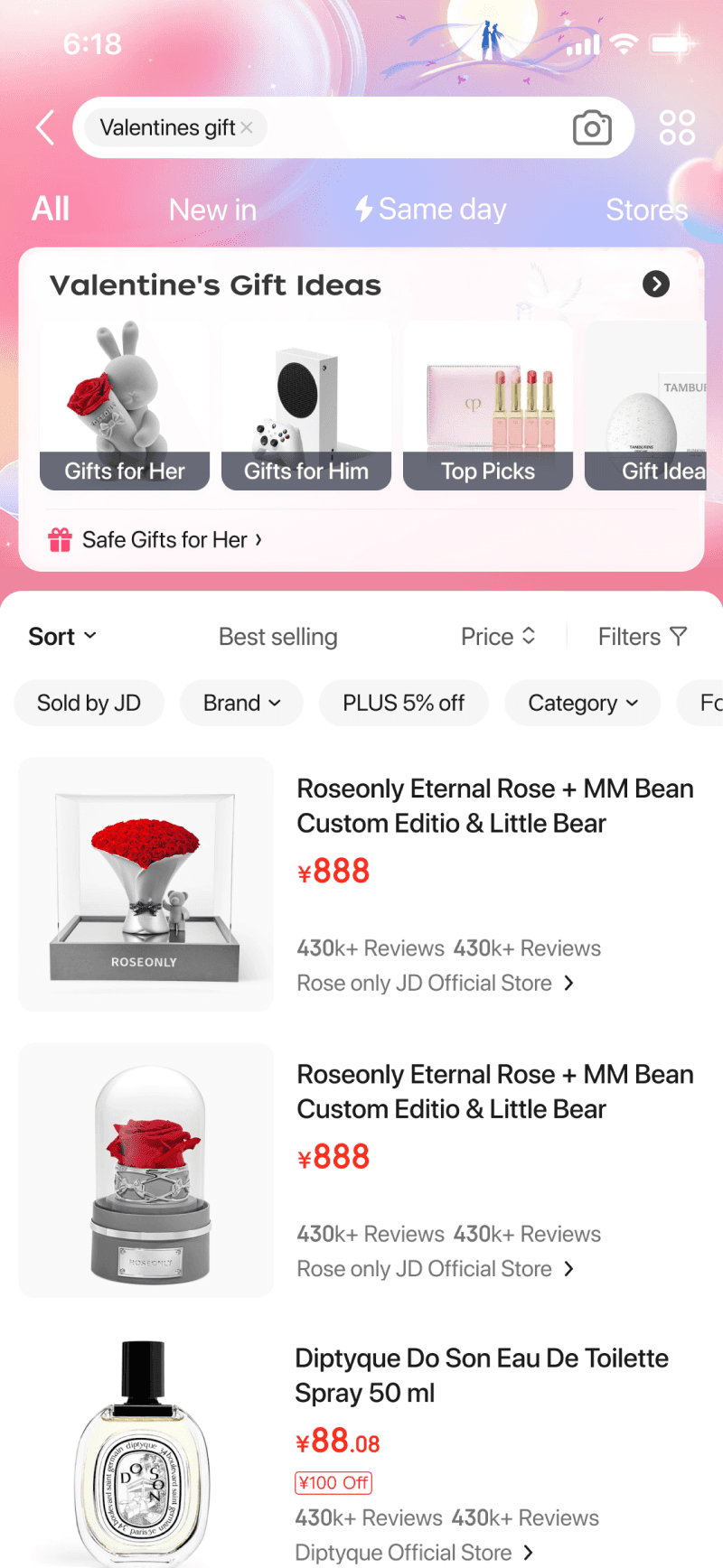
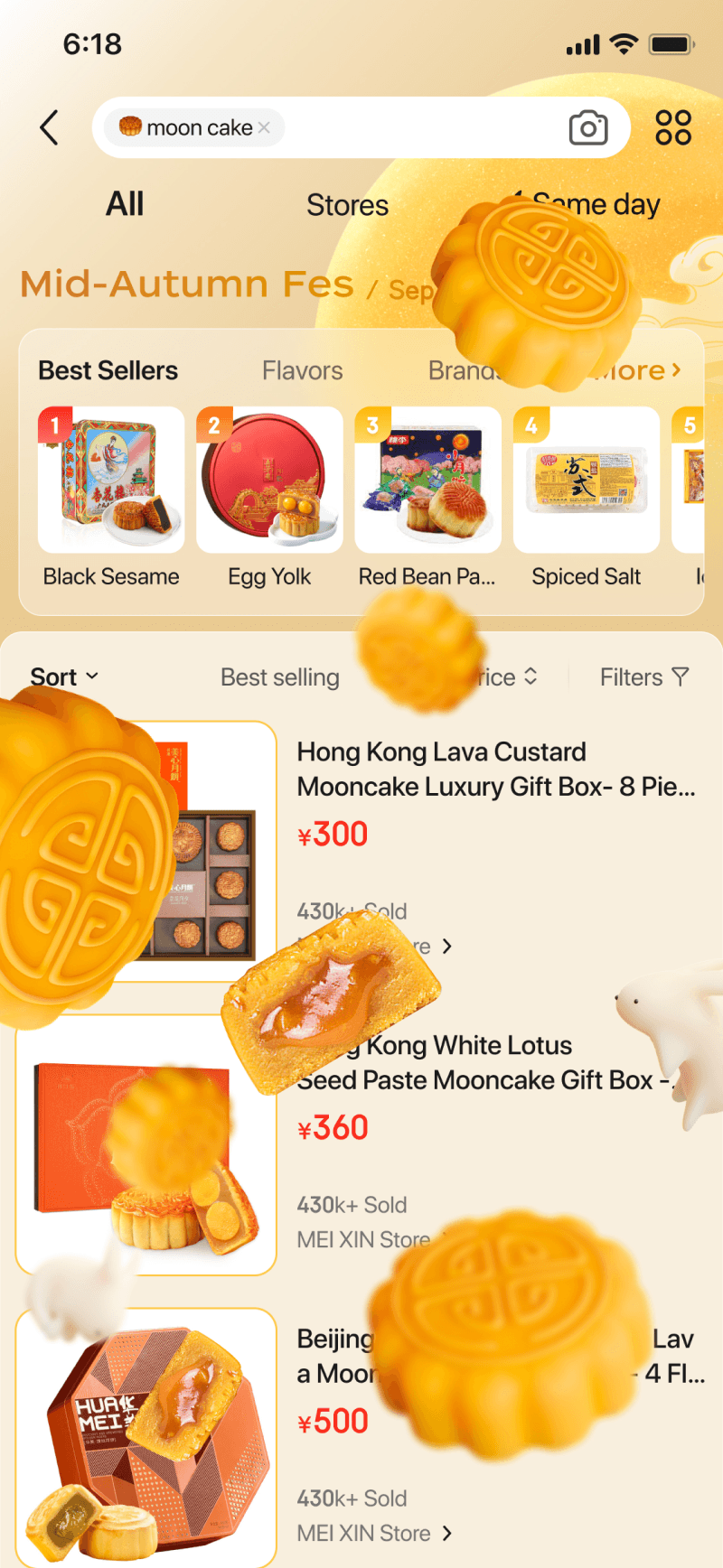
During public holidays and seasonal festivals, search behavior shifts—users often enter contextual keywords (e.g., “Mid-Autumn gifts”) instead of item names or categories. These searches are not well supported today, leaving untapped opportunities for conversion.
Unmet User Needs
Keywords Only Match Product Titles
During holidays and festivals, users search with contextual keywords (e.g., "Mid-Autumn gifts") instead of product names.
"I want health and outfit ideas for Winter Solstice, but search result shows random winter titled children books..."
What we heard
Insight
High demand + unmet needs = opportunity
Users have strong cultural shopping habits tied to specific holidays,
but our search doesn't align with these contextual search needs.

Strategy A
Public Holidays with Heavy Promotions
Mid-Autumn, Spring Festival
BU curates special gift collections
Heavy marketing investment
→ Strategy: Surface promotional features and use-case driven shopping lists
Strategy B
Seasonal Celebrations without Promotions
Winter Solstice, seasonal health themes
Users want themed recommendations
No specific BU promotions
→ Strategy: Editorial-driven exploration
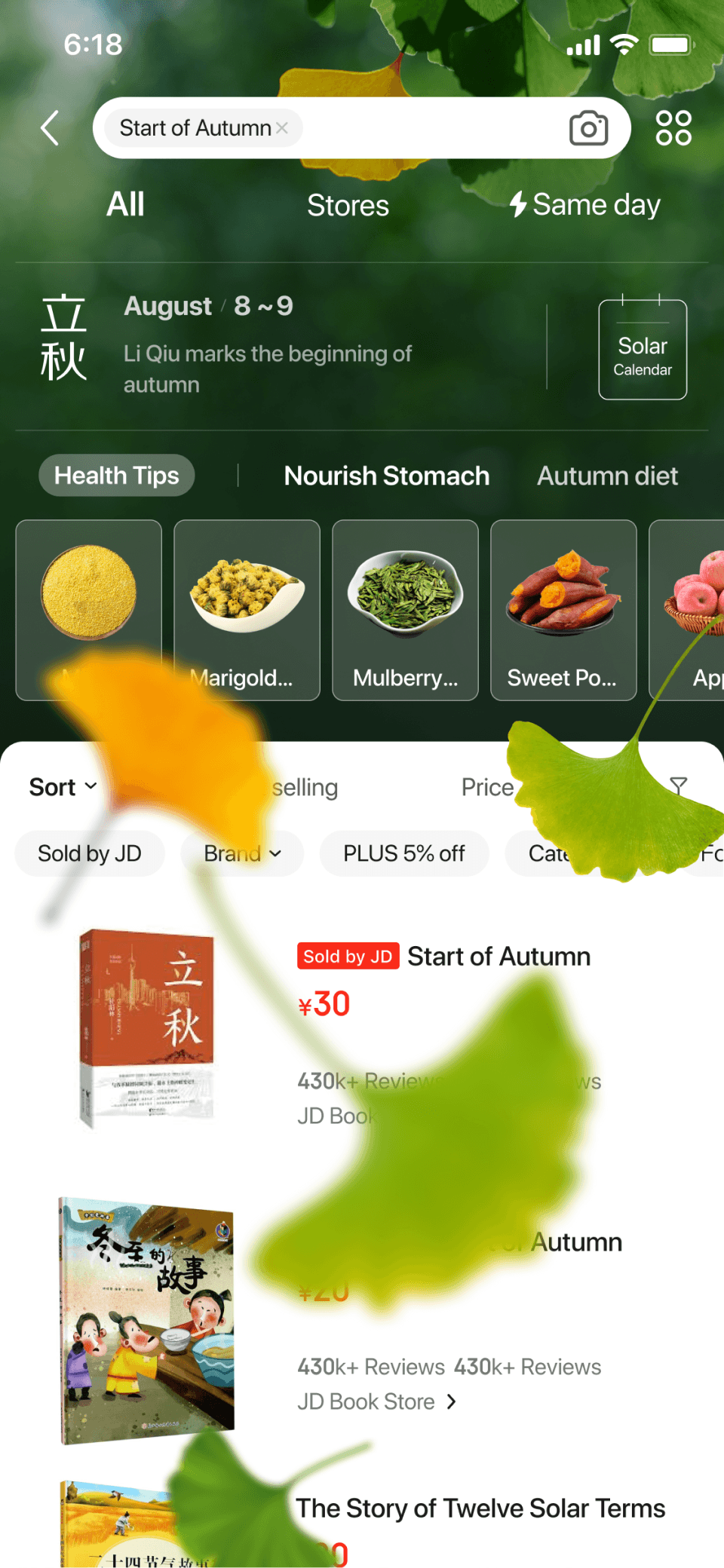
Solution1
For promoted holidays
Use-case driven shopping lists
Featured gift collections
Category-specific promotions
Solution2
For seasonal themes
Editorial recommendations
Themed product curation
Lifestyle-driven discovery
landing page
landing page
Promotional Events
Unmet User Need
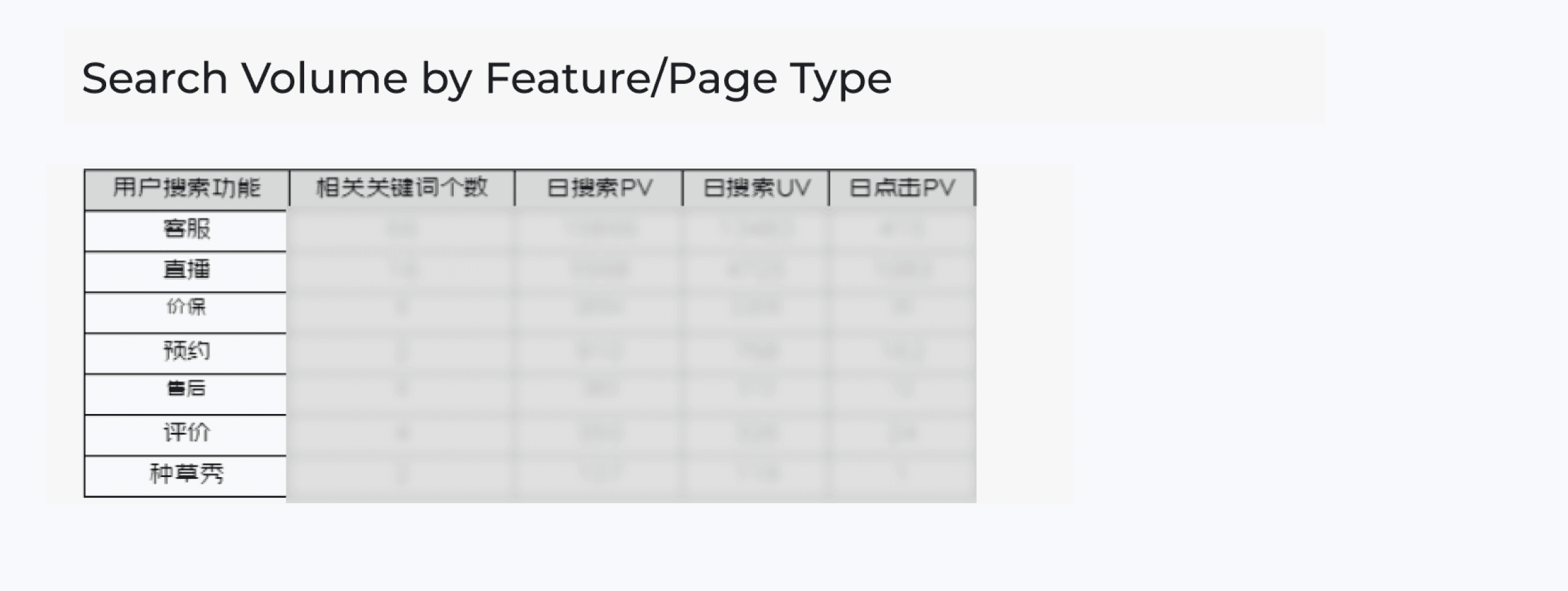
High Search demand for features and event pages
During major promotional events (6.18, 11.11, Black Friday), users search for event pages and features—often influenced by offline ads or livestreams.
Common searches:
"618 home appliance sale page"
"11.11 Luoyong Hao’s Live Stream Room"
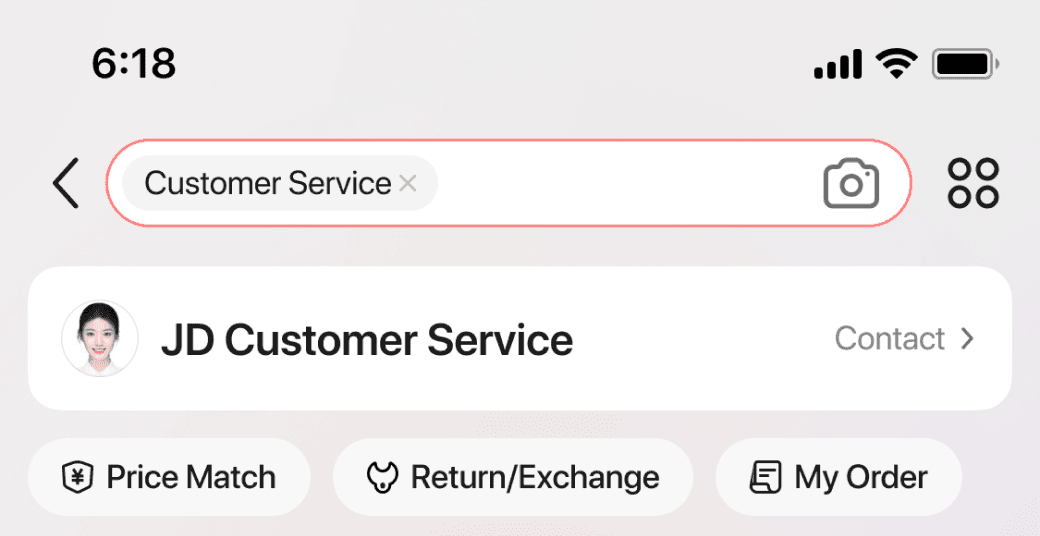
Specific feature names e.g. customer service
Problem:
Current search logic treats these as product queries, returning generic product results instead of the curated event pages and features users are seeking.
Poor Marketing-to-Search Conversion
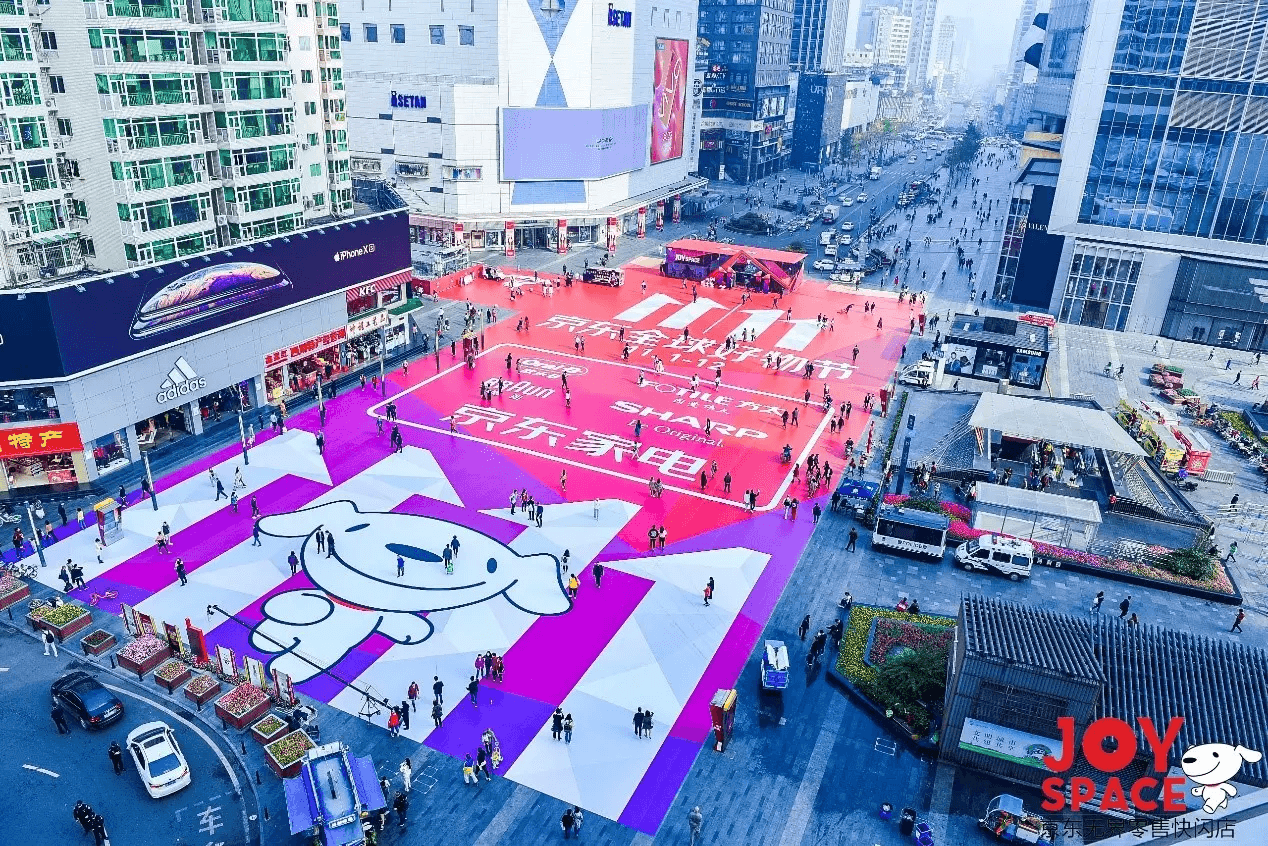
Broken Funnel from Offline Ads to Online Purchase
Context:
All business units + platform invest heavily in offline advertising (subway, billboards, TV)
Significant spend on online marketing (social media, livestreams, influencer partnerships)
Ads primarily promote event landing pages and livestream rooms
The gap:
Users see offline/online ads → Come to platform → Search for advertised content → Can't find it → Drop off
We're failing to capture marketing-driven traffic because search doesn't connect ads to destinations.

Insight
User demand + marketing investment both pointing to the same problem:
Search needs to surface event pages and features, not just products.
Solution
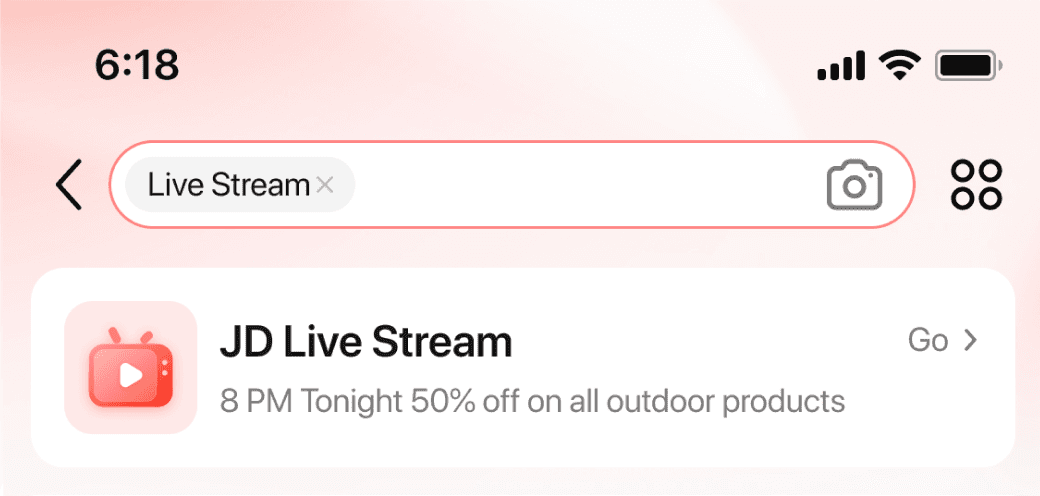
Direct search access to event pages and promotional features
Direct links to event landing pages
Feature shortcuts in search results
Campaign-specific entry points
Integration with livestream events
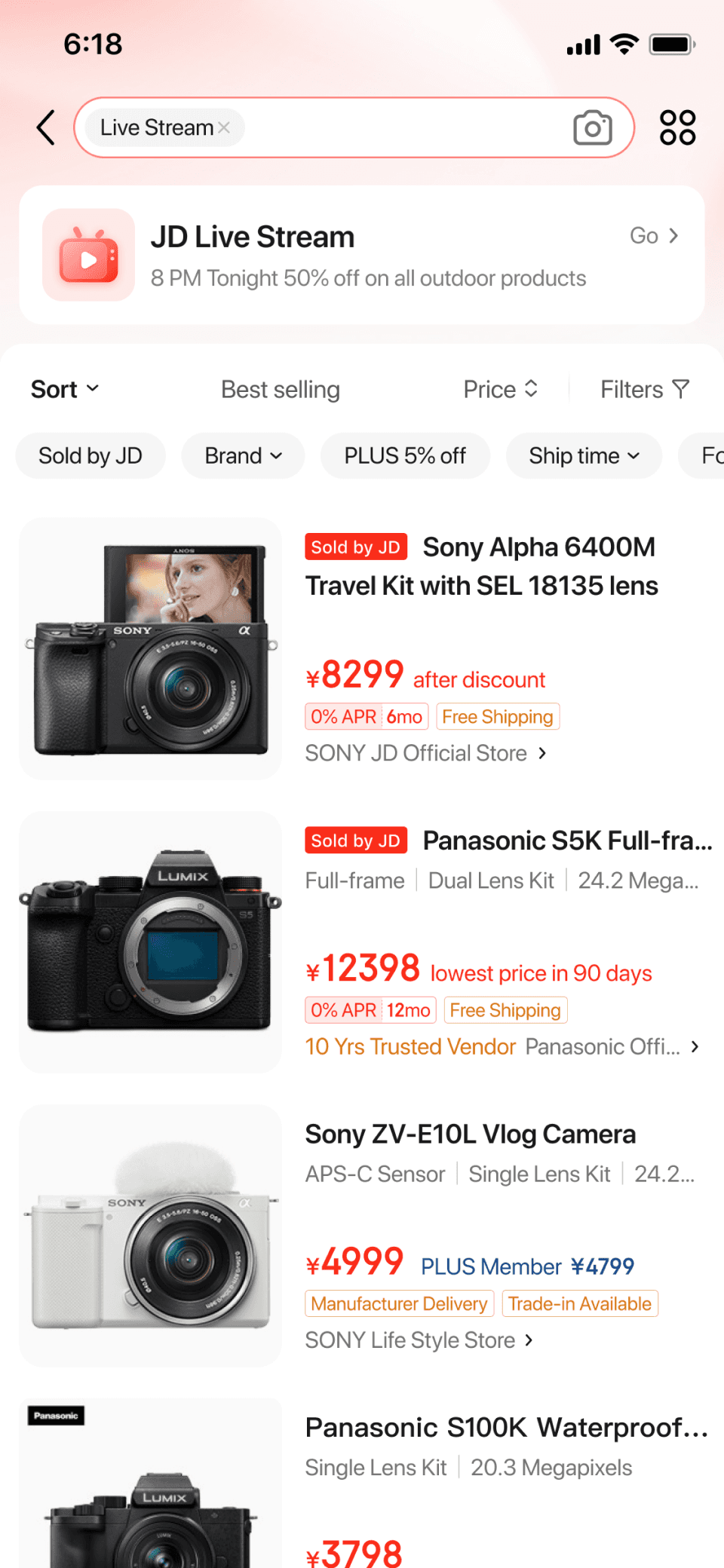
search for Live Stream page
search for function
Results After Launch
We launched the feature with A/B test
UCTR uplift
1.5
%
UCTR = Click PV / Search UV
diff = A/B - 1
UCVR uplift
1.8
%
UCVR = Total Order Lines / Search UV diff = A/B - 1
Insights: Users in the treatment group showed strong engagement with model-based filtering, confirming demand for personalized recommendations. Interestingly, some users initially disabled the “recommend accessories by vehicle model” option, only to re-enable it later—indicating a trust-validation step before committing to system suggestions.
Next Steps: We plan to run qualitative research to uncover the motivations behind toggling behaviors and refine the recommendation logic to build stronger user confidence.
Filter car accessories by vehicle model
Overall impact after 3 phases online testing & iteration
UCTR uplift
33
%
UCTR = Click PV / Search UV
diff = A/B - 1
UCVR uplift
72
%
UCVR = Total Order Lines / Search UV
diff = A/B - 1
UV Value uplift
77
%
Mid-Autumn Festival
Chinese Valentine’s Day
Related Projects