AI FitFinder - ML Recommendation Feature
Integrating conversational AI into the shopping journey to address user pain points in fashion decision-making
Overview
Context & Challenge
This project addresses a key challenge in JD.com’s fashion retail platform: helping users, particularly high-income, middle-aged male shoppers, select clothing that suits their body type, usage scenarios, and styling preferences. The existing platform offers editorials and recommendation algorithms but the personalization is limited.
Opportunity
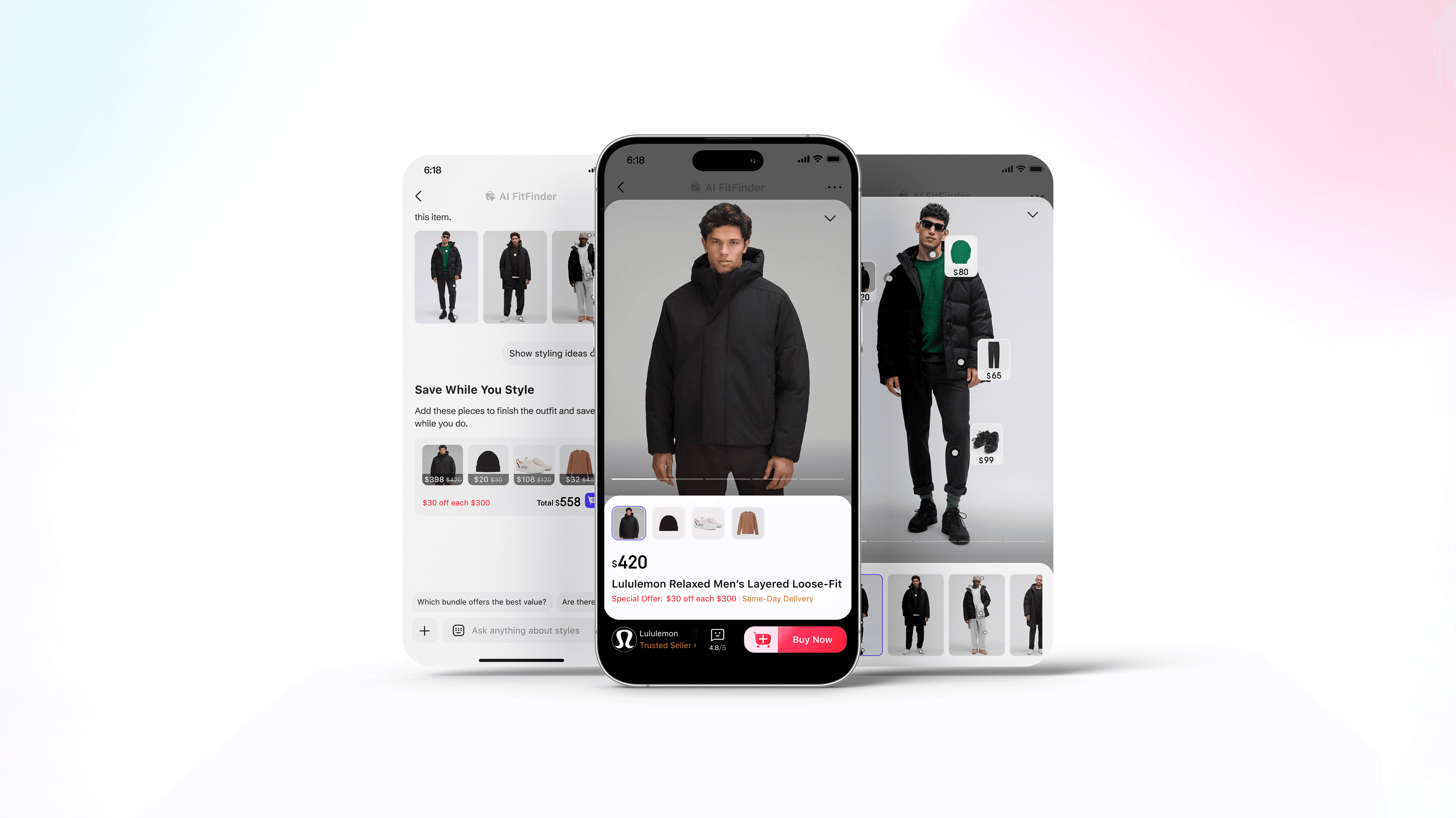
To tackle this challenge, I designed a a chat-based AI stylist assistant. Through a conversational interface, the chatbot collects user attributes (e.g., body shape, height, weight, skin tone) and translates them into personalized outfit recommendations. Beyond product suggestions, the system provides outfit recommendations, fit guidance, and styling ideas at key moments in the shopping journey.
The goal was to reduce decision fatigue, improve confidence in purchase choices, and open new opportunities for cross-selling through personalized recommendations.
Team

Product Designer
Skills
User-Centered Product Thinking
Conversational Design
Integration into Existing Ecosystem
Strategic Design Planning
Timeline
2025
Module
JD.COM Platform End-to-End
Tools
Figma
Project Background




Technology
Clothing
Target Audience
Strengths
Use Cases
Painpoints
Product Characteristic
Weaknesses
Opportunity
Avoid
(Design Principles for AI-Powered Features)
The Challenge
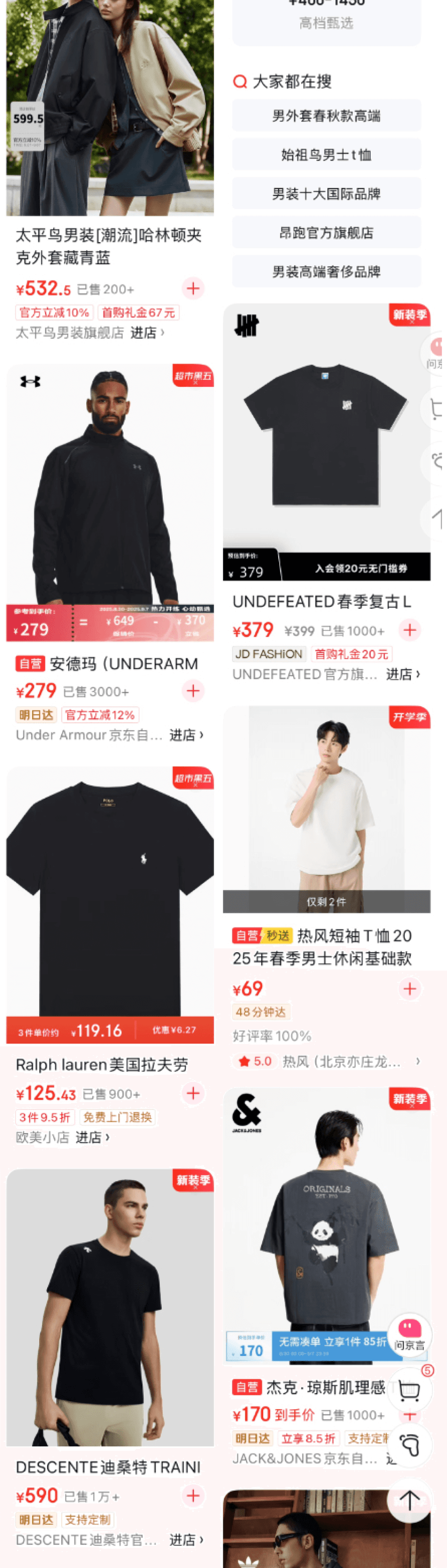
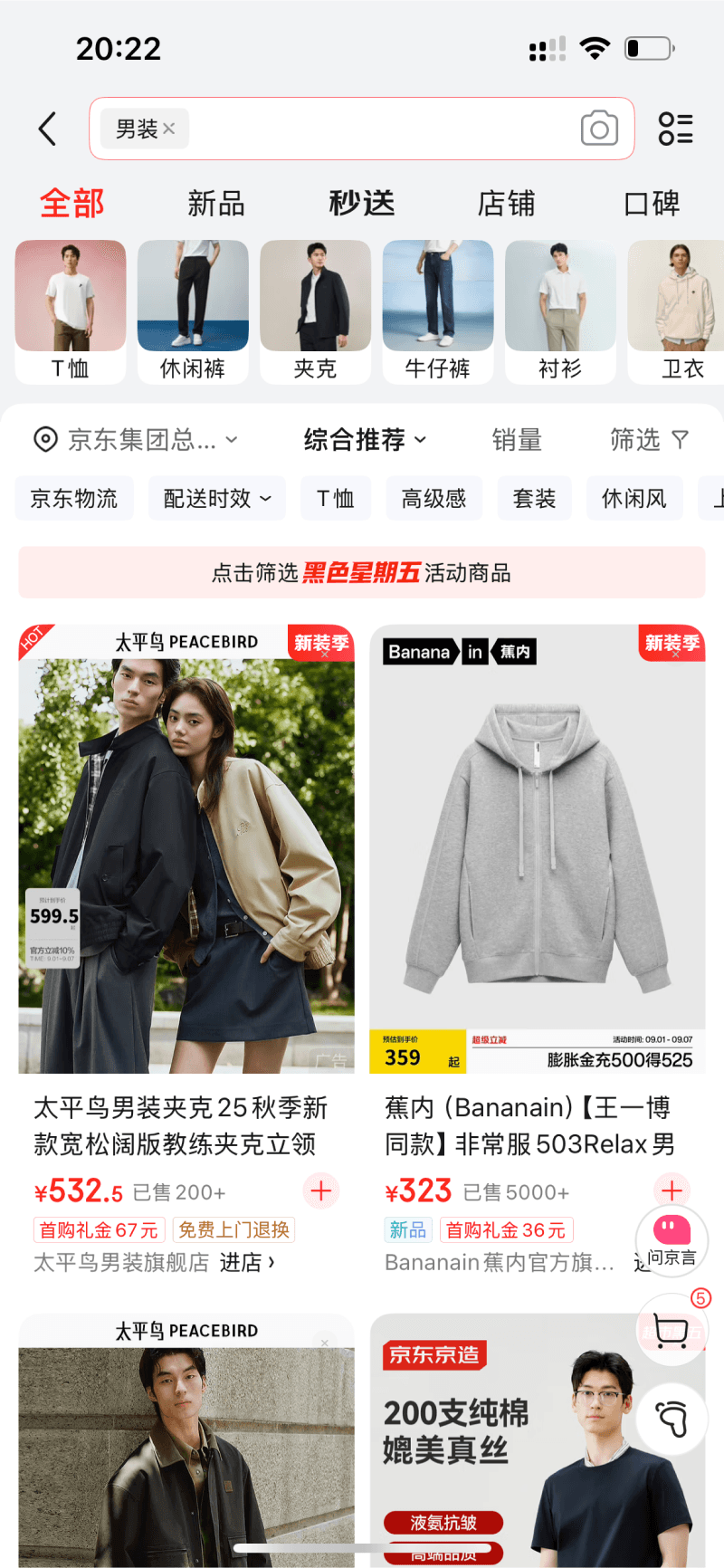
Fashion retail has long been a challenge on JD.com, especially for middle-aged, high-income male users who typically have specific shopping goals and limited time to browse the vast selection of clothing. Their hesitation to complete purchases often stems from concerns about fit, style compatibility, and skin tone matching. Traditional methods like user-generated reviews and editorial recommendations have limits.
Design Opportunity
I saw an opportunity in ML-powered recommendation systems, which offer more precise personalized outfit suggestions and could replace outdated editorial and user-generated content. This system work as a top sales associate, proactively recommending options they’ll love before they even ask.
Design Model
In designing this solution, I followed a model: When integrating technology into existing designs, designers should align technology’s strengths with user pain points and the product’s core characteristics, ensuring that technology enhances rather than disrupts the original experience.
User pain-points +
Product Characteristic
Overwhelming Options
Lack of Styling Inspiration
Difficulty Expressing Preferences
Technology
Strengths
Personalized Guidance
AI assistant can collect user attributes (e.g., body type, height) and delivers tailored clothing options.
ML Recommendations
ML-powered recommendations replace the current editorial and user-generated content, offering more accurate and effective suggestions.
Personalized Accuracy
As ML collects user preferences and purchasing habits, it can deliver increasingly accurate recommendations over time

Design
Goals
chat-based shopping experience
As a alternative shop experience to assist users directly to purchase, reducing time spent on browsing and decision-making.
Integrate within the existing shopping flow
Replace ineffective editorial and user-generated content with a machine learning recommendation system that adapts to user data.
Build Personalized User Profiles
Use ML to continuously collect and refine user data, delivering increasingly personalized shopping experiences.
02 . AI Touch points and Information Flow
To seamlessly embed the ML recommendation system into JD.com’s existing app, I planned how both the AI recommendation flow and existing app flow would interconnect.
Based on the existing user journey, I designed two new, interrelated flows: the ML-powered product recommendation flow and the shopping flow leveraging the AI assistant. Additionally, I developed a series of conversational designs for different stages of the AI assistant to improve the efficiency and effectiveness of AI interactions.
Homepage / Search
Product Detail Page
Cart
Profile /
Order History
App Flow
Discover
Decision making
Conversion &
Average Order Value
Repeat Purchase
ML Rec. Flow
AI
Rec.
Style Discovery
Trending styles and looks
Exclusive promotions
Exclusive promotions
Recently viewed items on sale
Collecting customer style and fit preferences
Fit & Style Guidance
Colletct Customer Information
fitting review by users
Fit inspiration
Similar Product with lower price
Complete the Look
Fit inspiration
Inspiration with promotion
Personalized Offers
Inspiration with promotion
Fit inspiration
Connection
Help narrow down options at the start
Suggests personalized options based on body type, height, etc.
Provides complementary items based on the selected item
Suggests complementary items on sale
03. Design Concept
The ML-powered recommendation system was integrated into two key dimensions of JD.com’s shopping experience:
3.1
ML Recommendation Entry Points Design
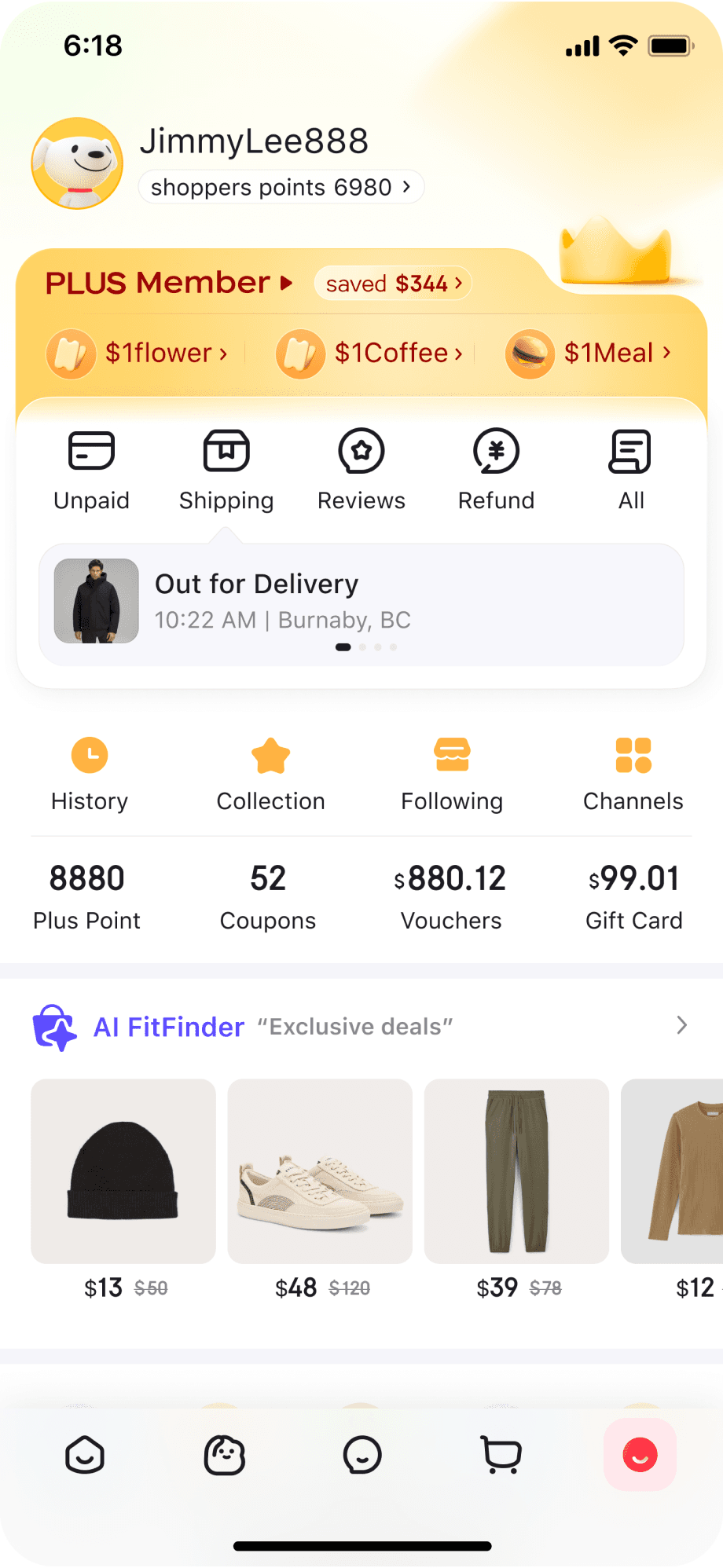
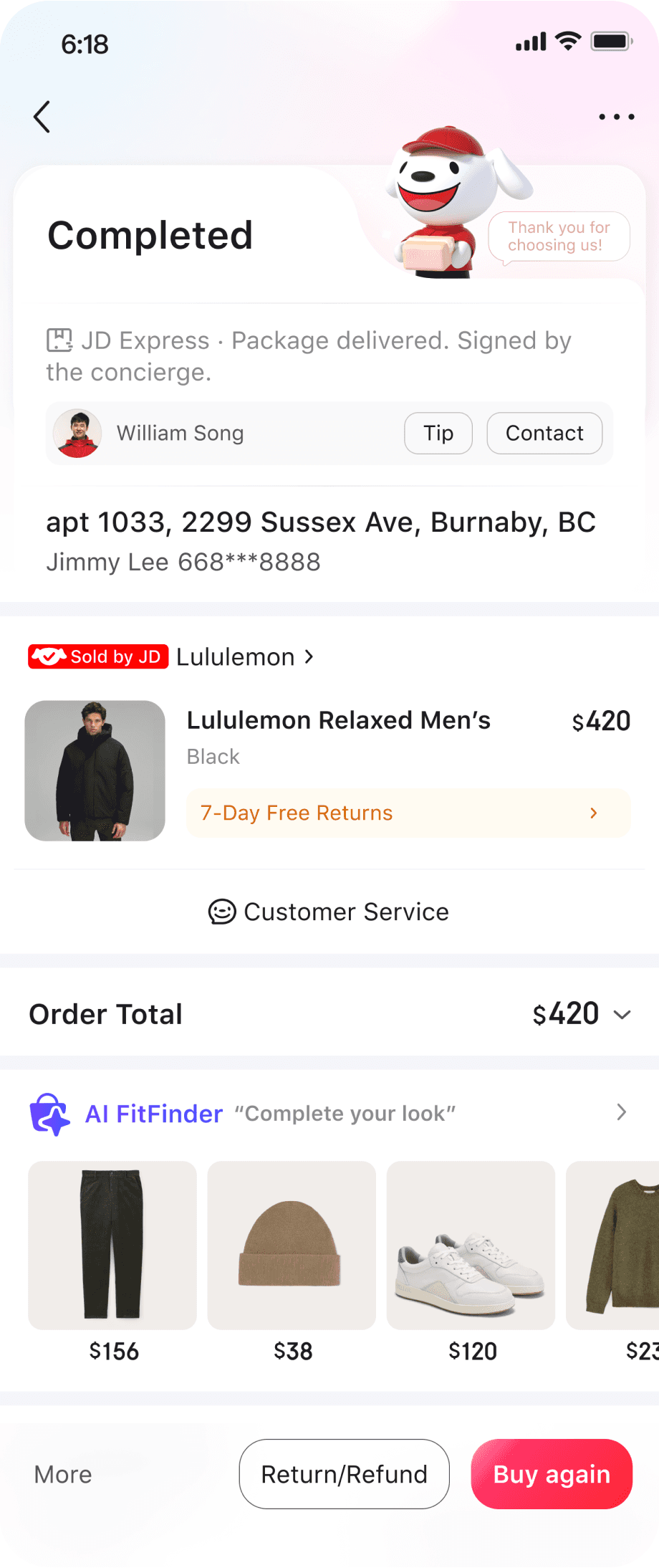
I designed AI interfaces and screens within the existing app to provide timely guidance and reference at key steps, ensuring that the AI enhances the experience without disrupting the user’s original workflow. The AI assistant is accessible from multiple pages, allowing seamless engagement throughout the app.
3.2
AI-Assistant Shopping Experience Design
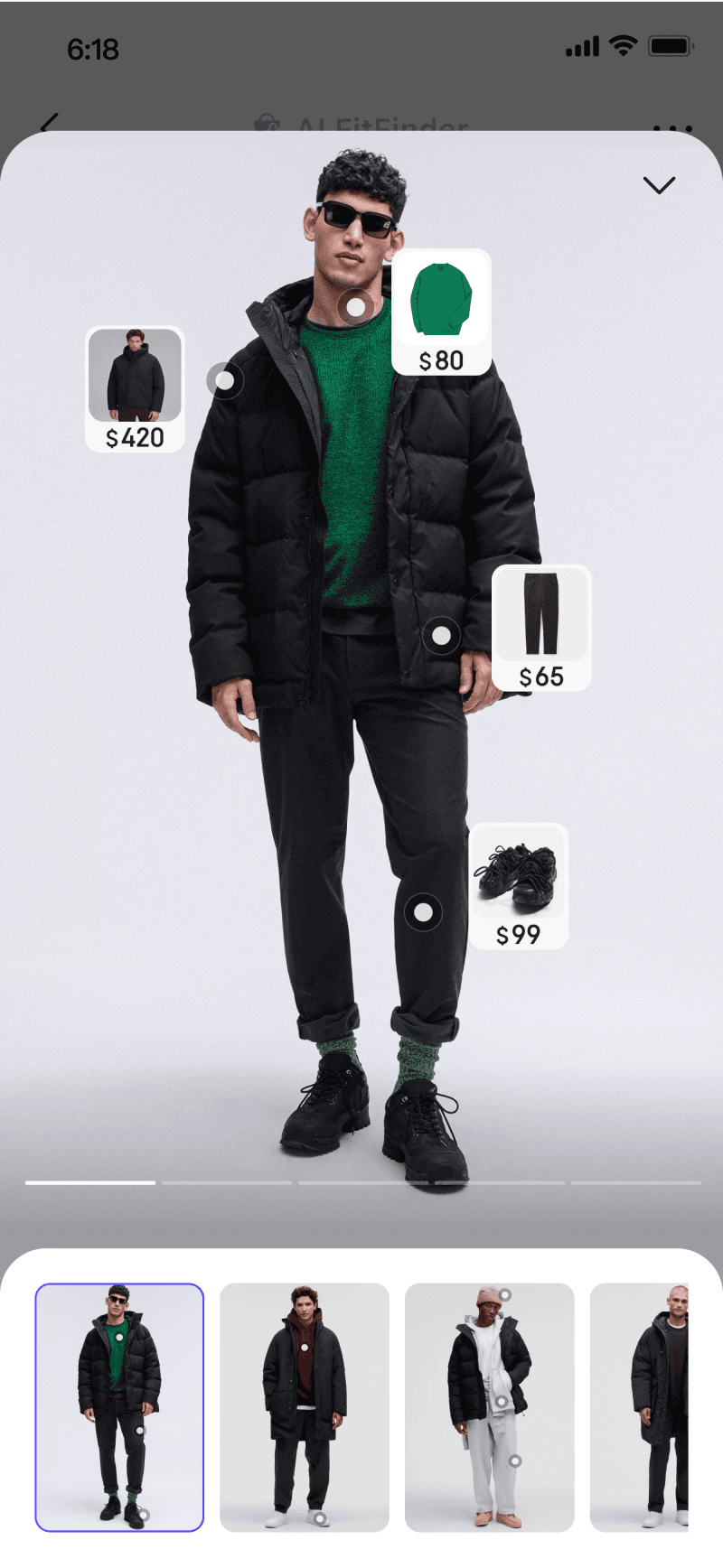
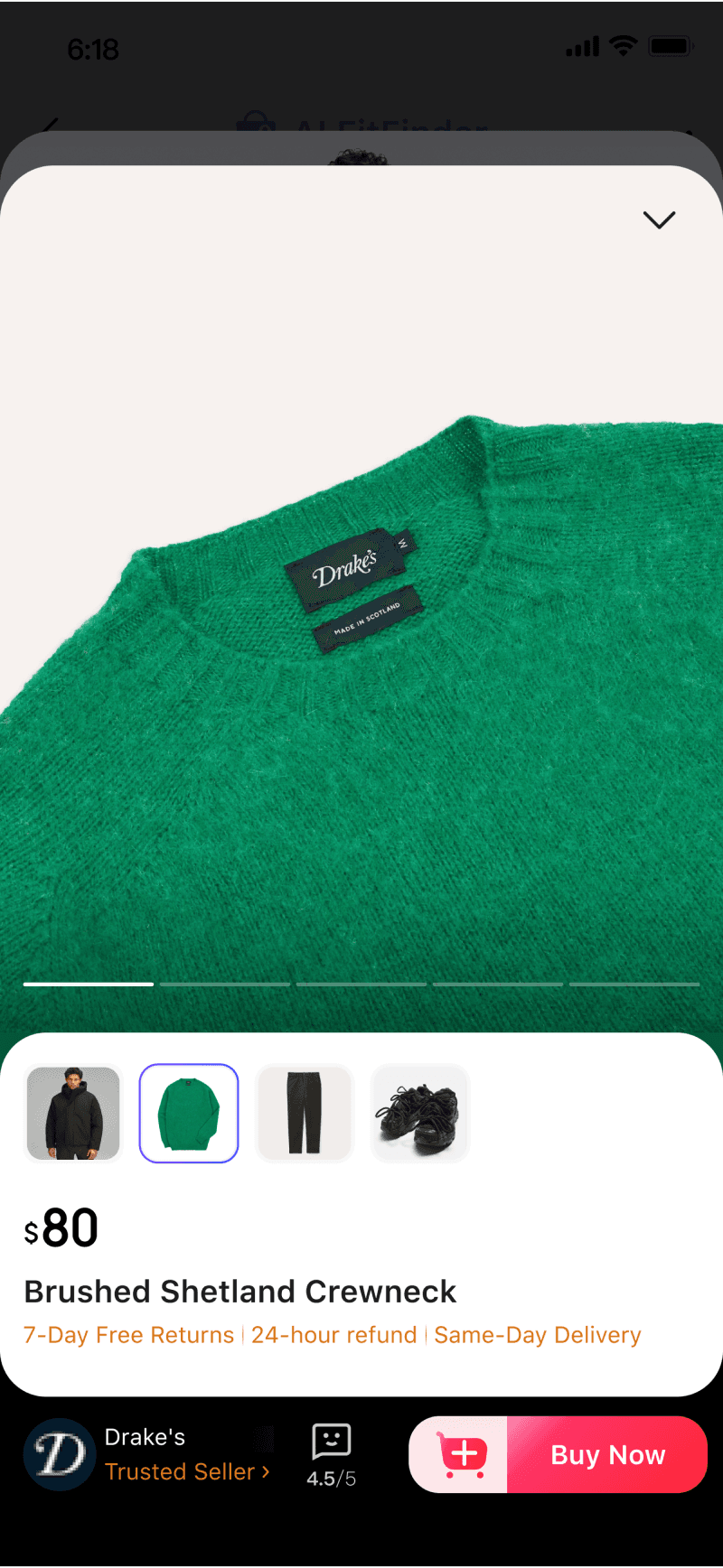
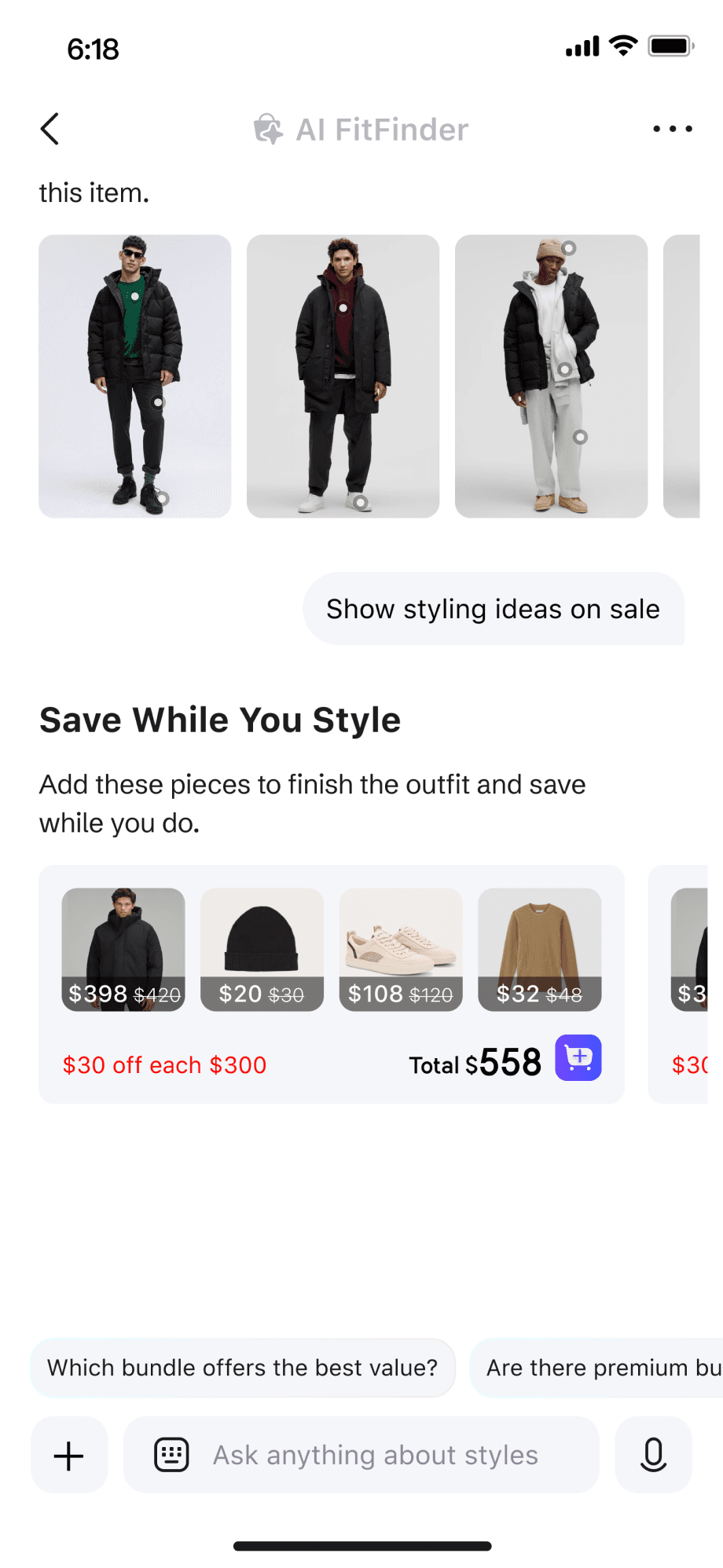
Once users access the AI assistant through the flows mentioned above, they enter the AI-powered shopping flow, where they receive personalized recommendations, bundling suggestions, and style-matching guidance, enabling them to complete their purchase seamlessly.
3.3
Conversational Shopping Framework
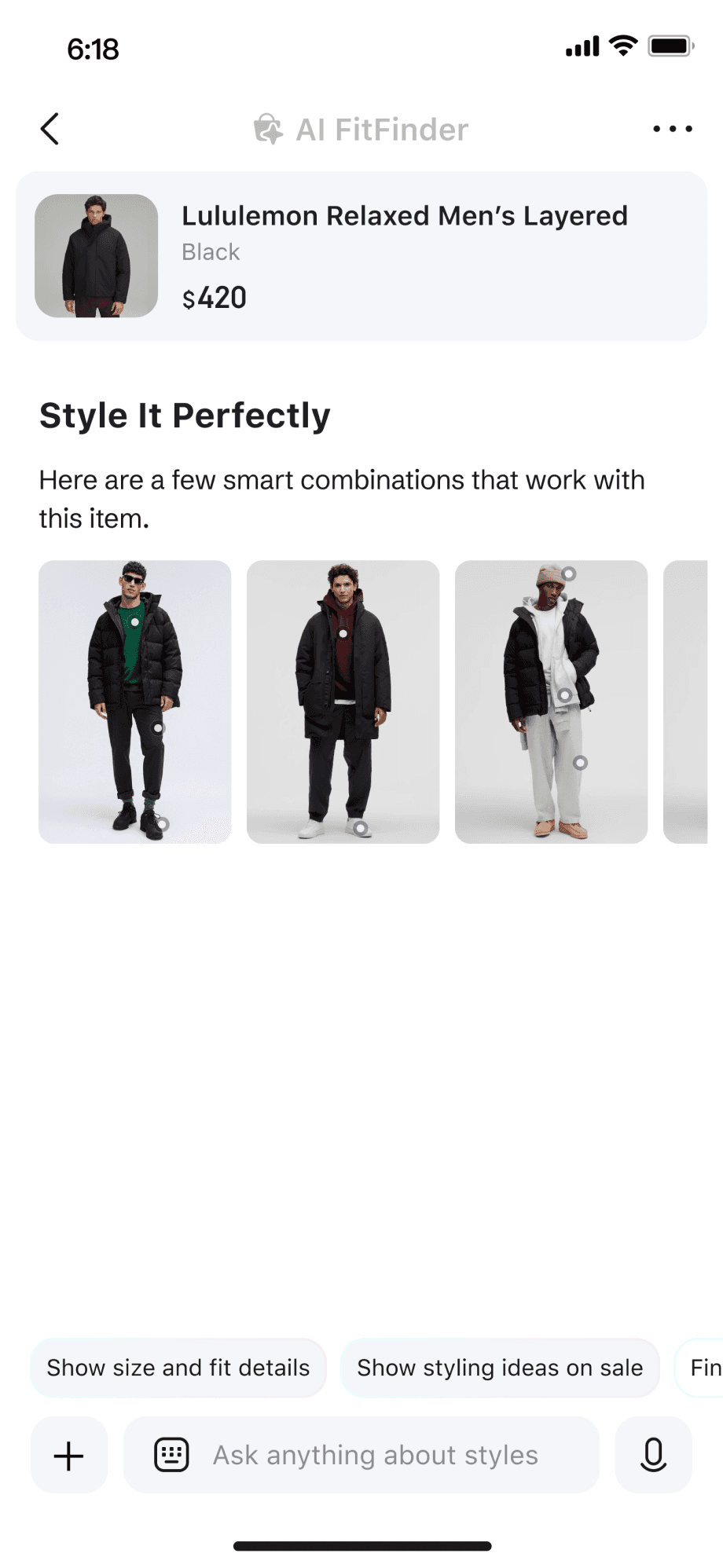
Inside the assistant, I designed a complete conversational shopping experience that guided users through the entire purchase lifecycle, offering personalized fit and styling advice at every stage.
3.1 ML Recommendation Entry Points Design
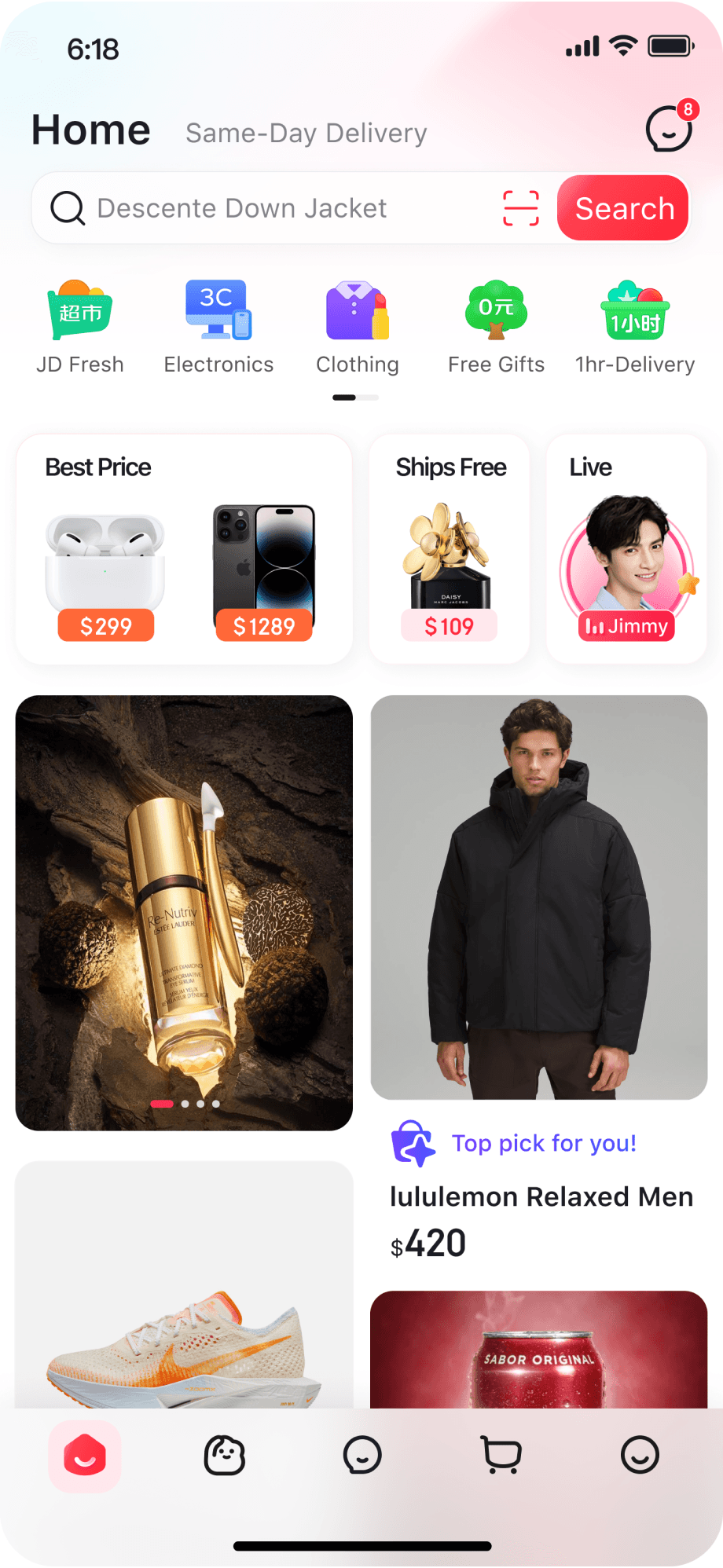
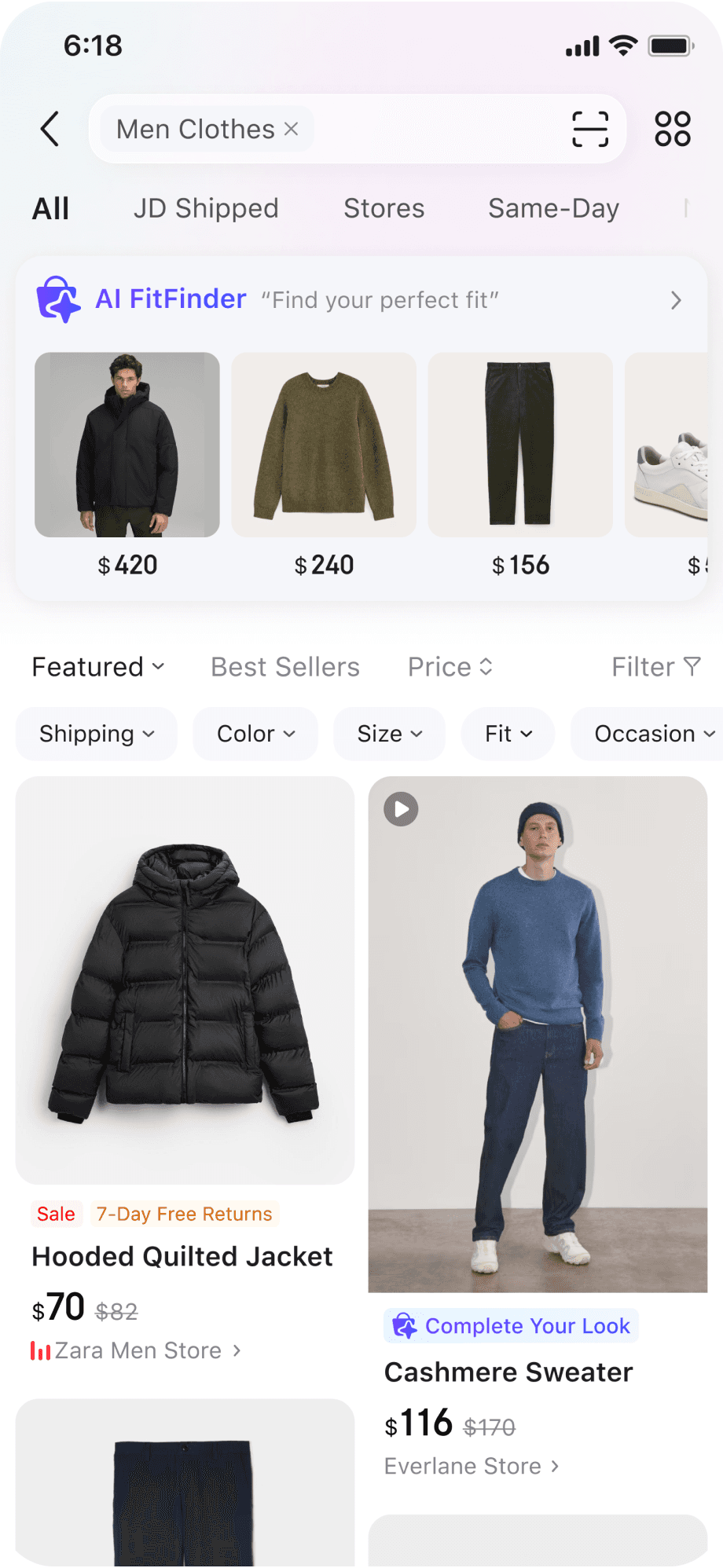
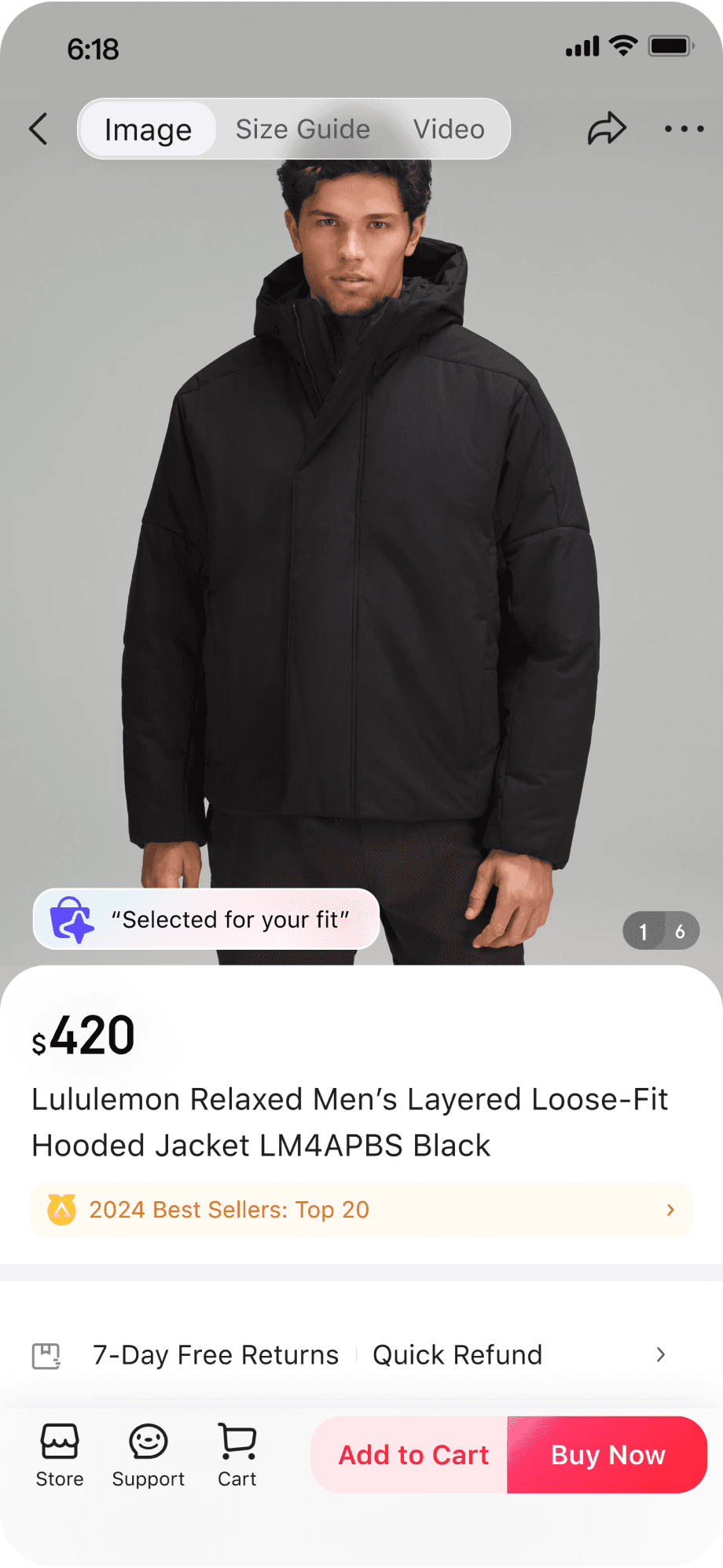
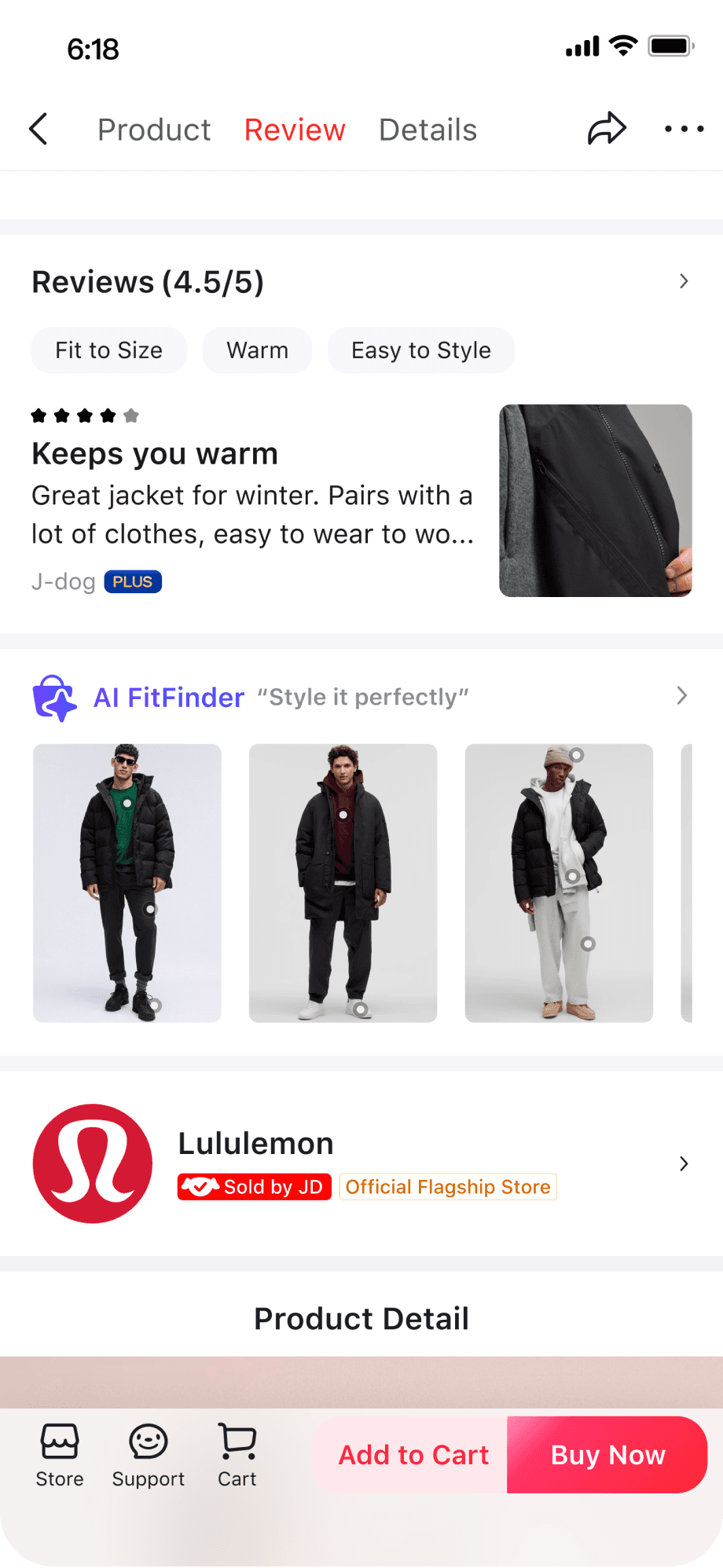
Homepage
Search Page
Product Detail Page

Discover

Decision making
Tailored
product feed
Based on order history
Based on user’s fit info.
Based on user’s fit info.
Fit and inspiration based on user’s fit info.
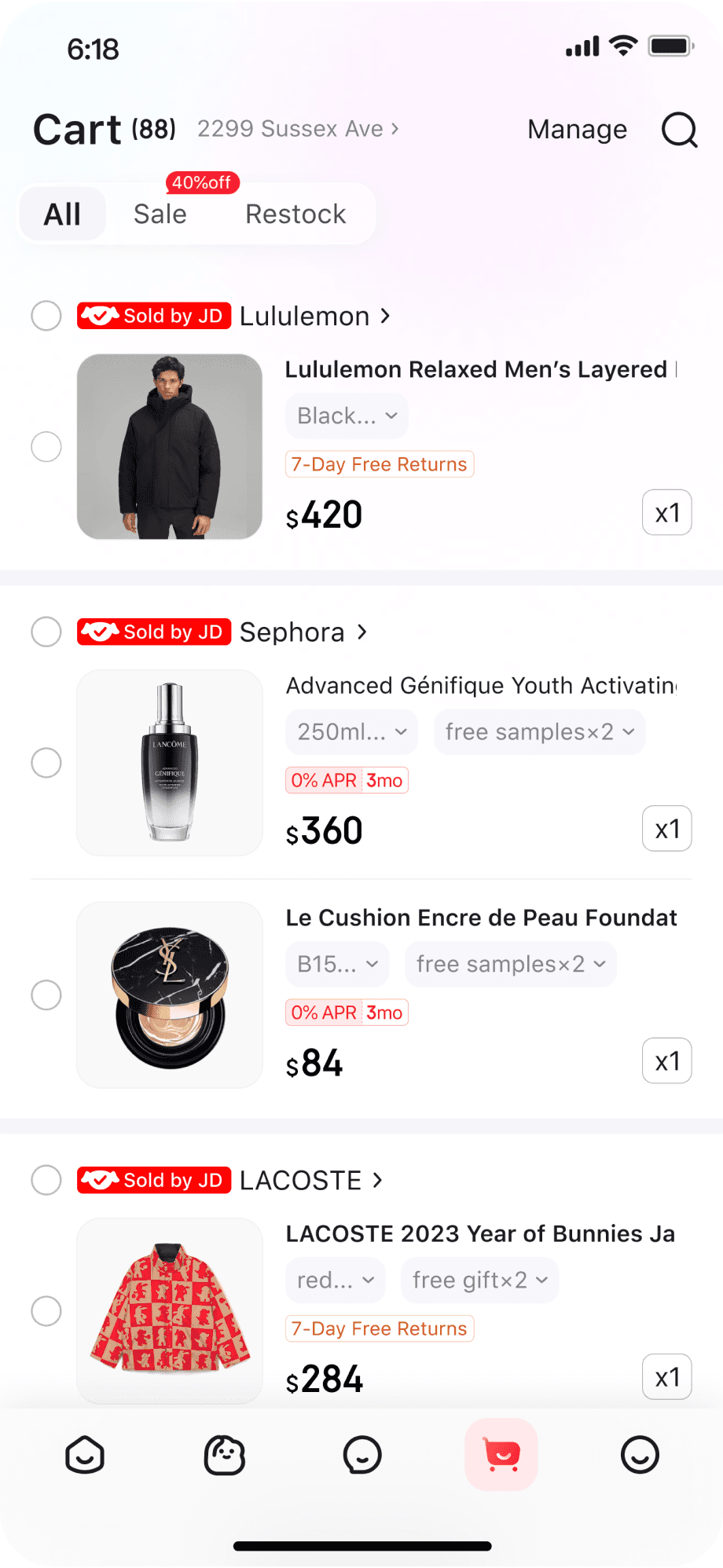
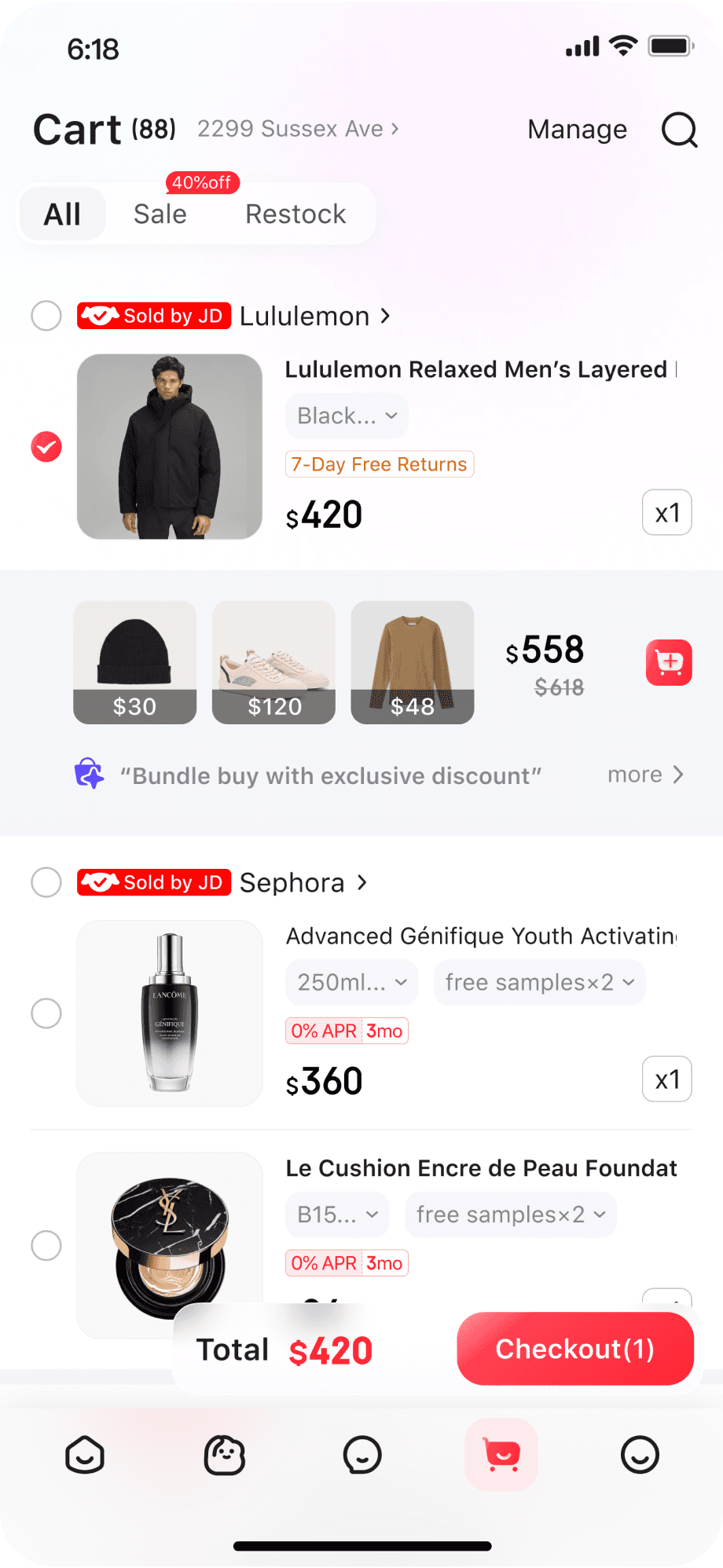
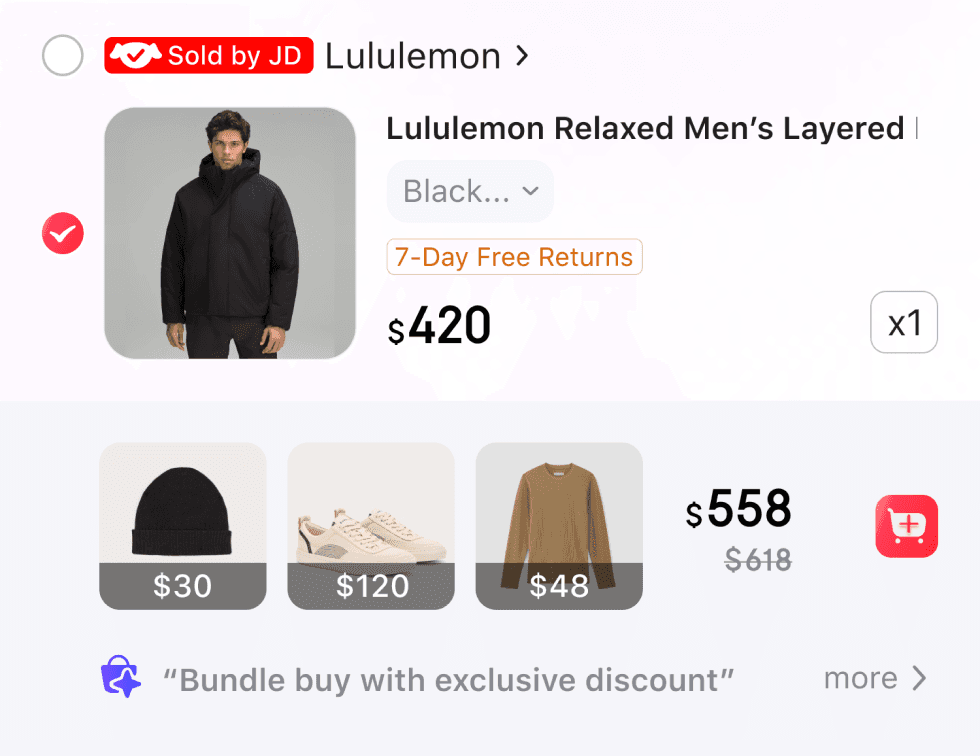
Styling Bundle with Exclusive Discounts
Exclusive deals of the stores that the user follows
Fit and inspiration based on user’s fit info.
Cart

Conversion & Average Order Value
User Profile
Order History

Repeat Purchase
3.2 AI-Assistant Shopping Experience Design
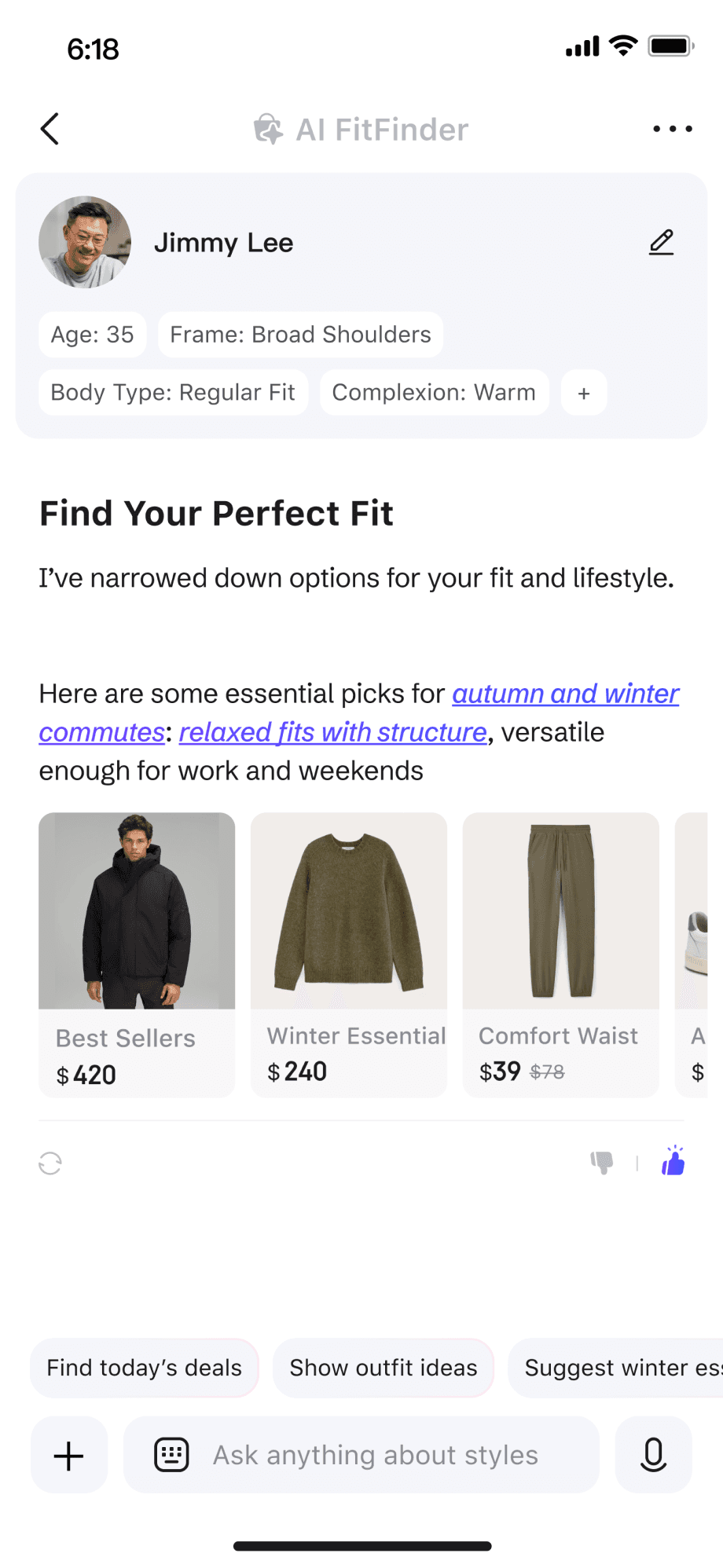
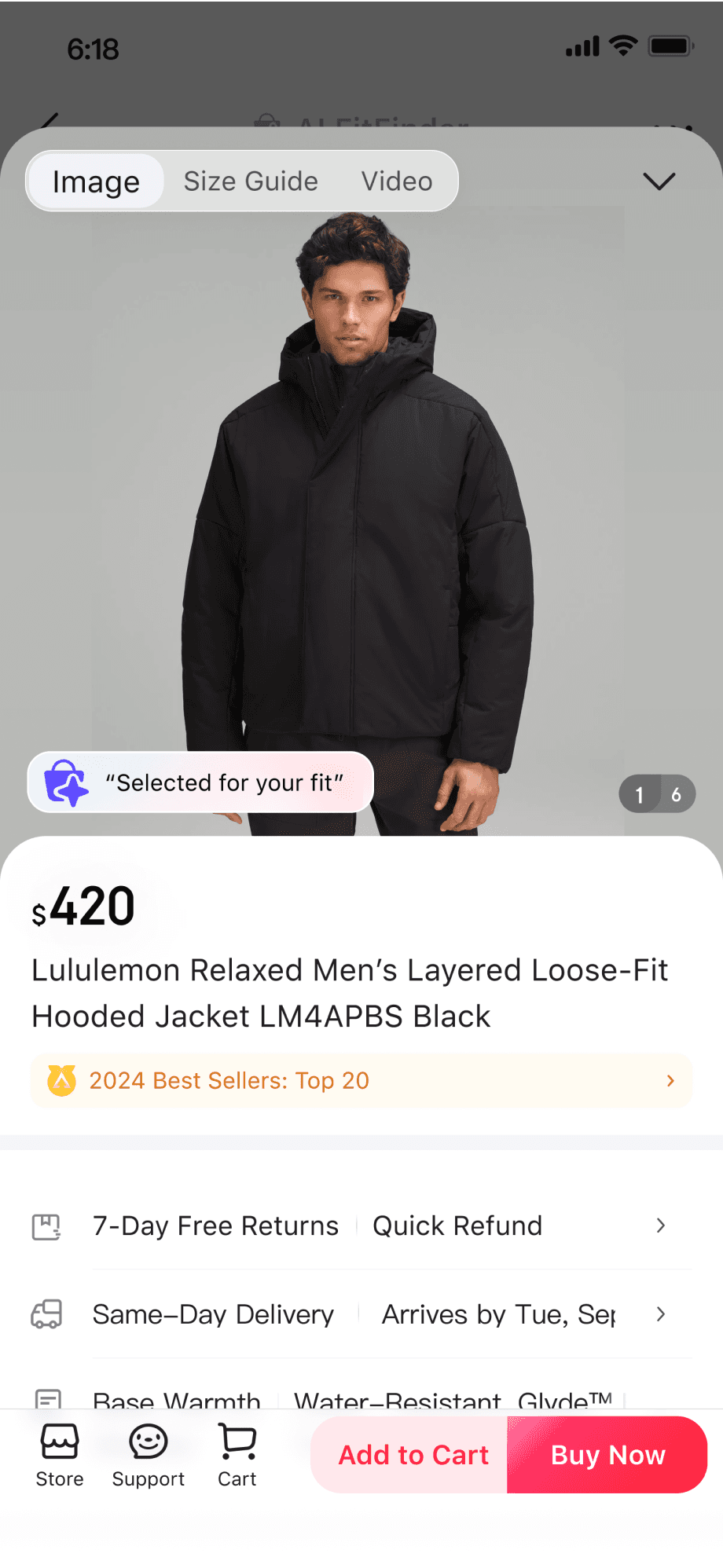
The AI-driven chatbot by itself also provides, end-to-end shopping experience, guiding users from discovery to return purchase just like a shopping associate.

Discover

Decision making
user’s fit profile
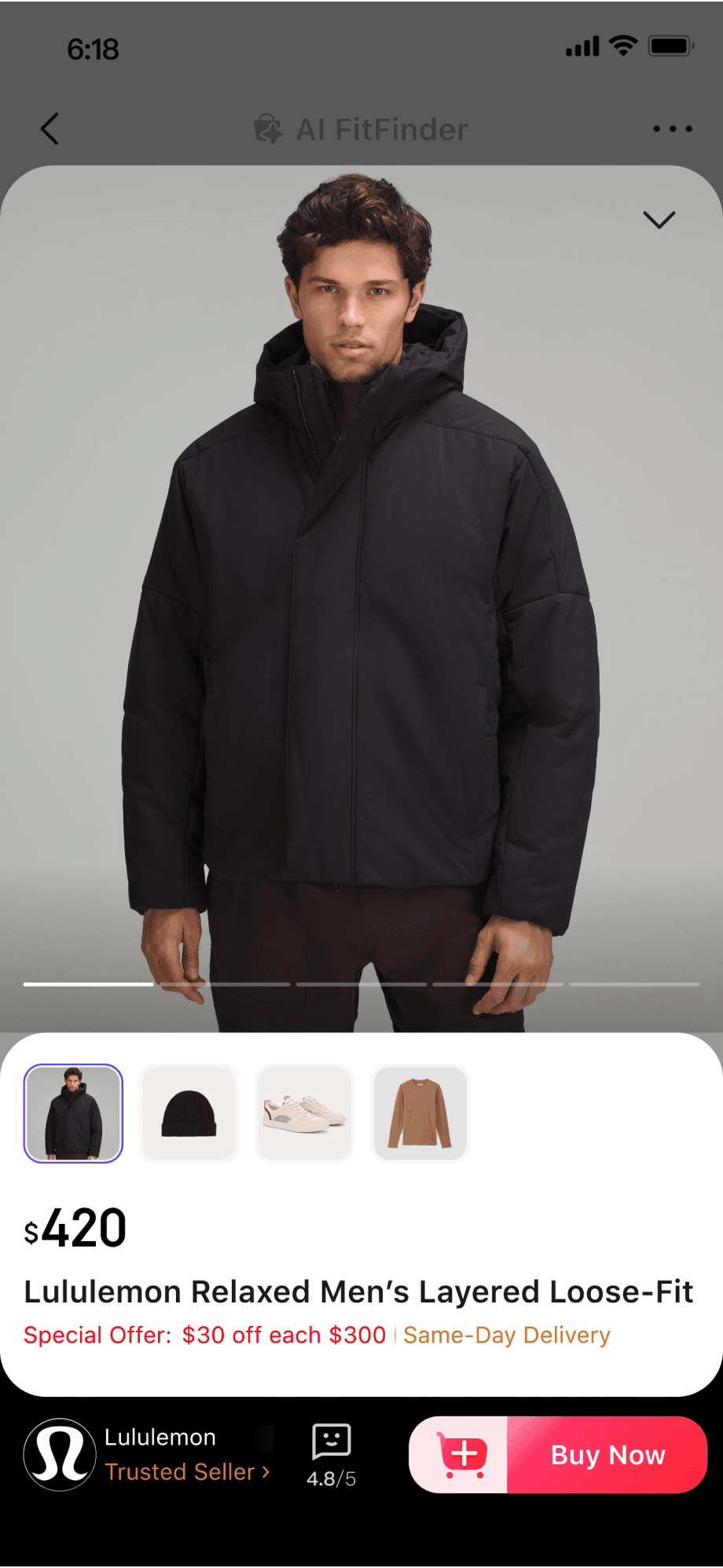
Styling Bundle with Exclusive Discounts
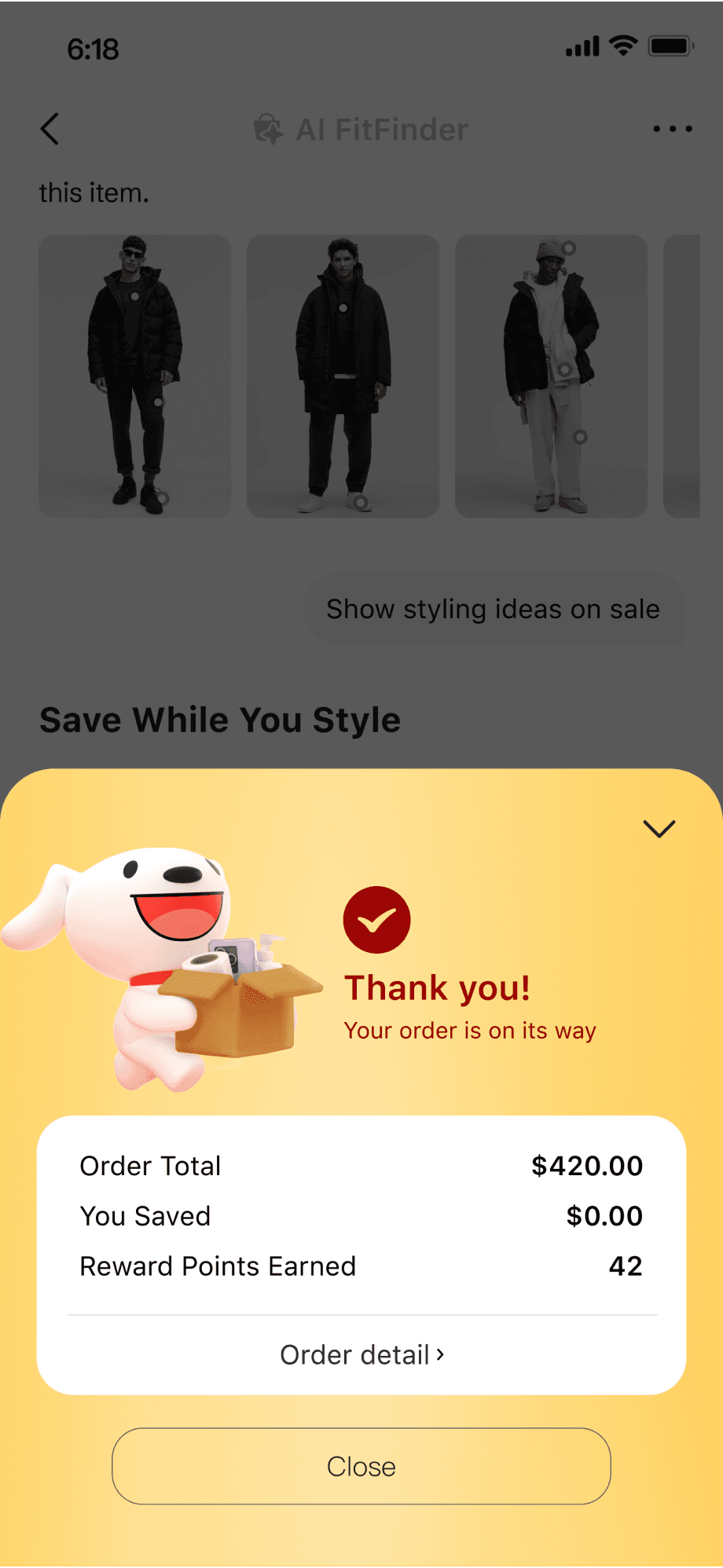
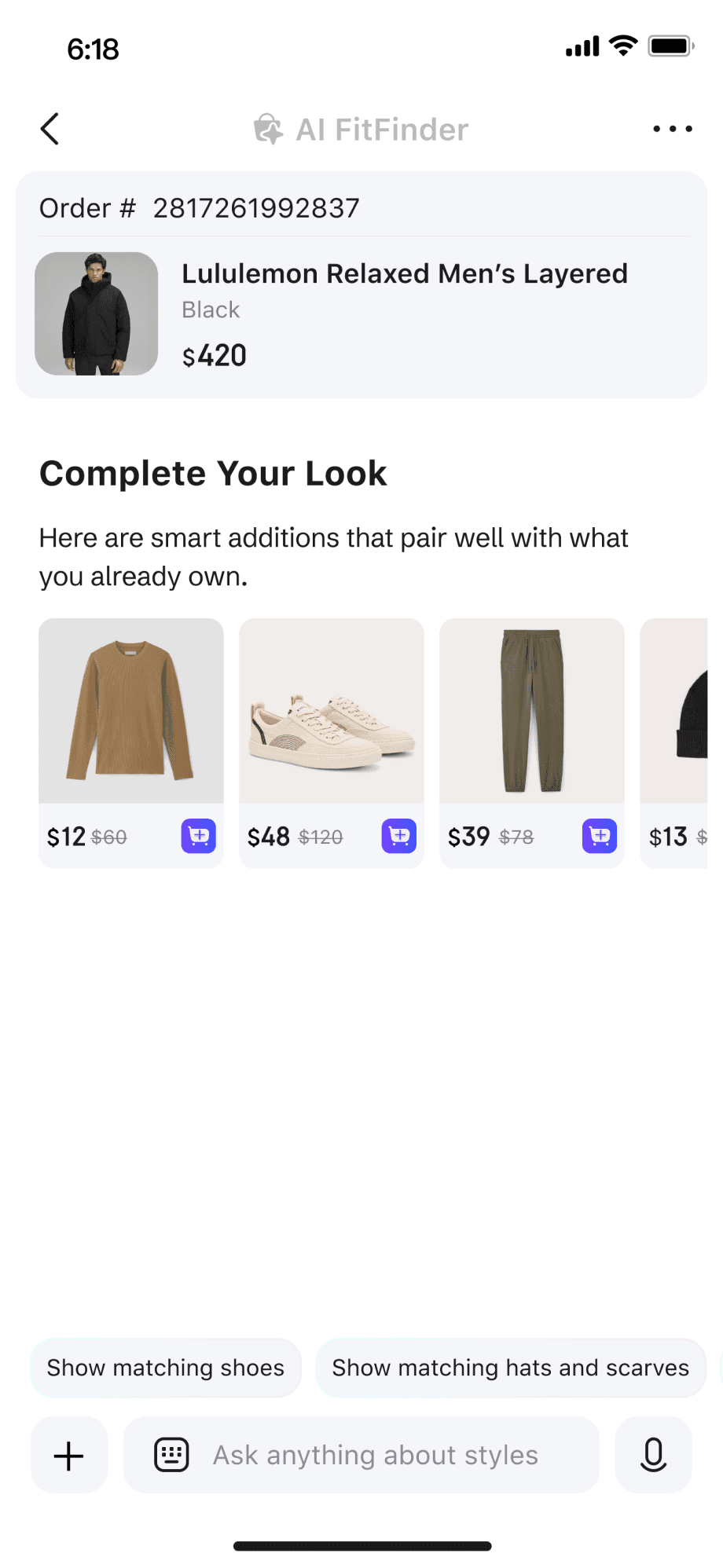

Conversion & Average Order Value

Repeat Purchase
Additions to ComplementPrevious Purchase
3.3 Conversational Shopping Framework
Within the AI-led flow, I designed personalized messaging to enhance the conversational experience with the AI assistant, ensuring that recommendations felt tailored and contextually relevant. The messaging was crafted to appeal to user preferences, based on data inputs like body type and style goals.
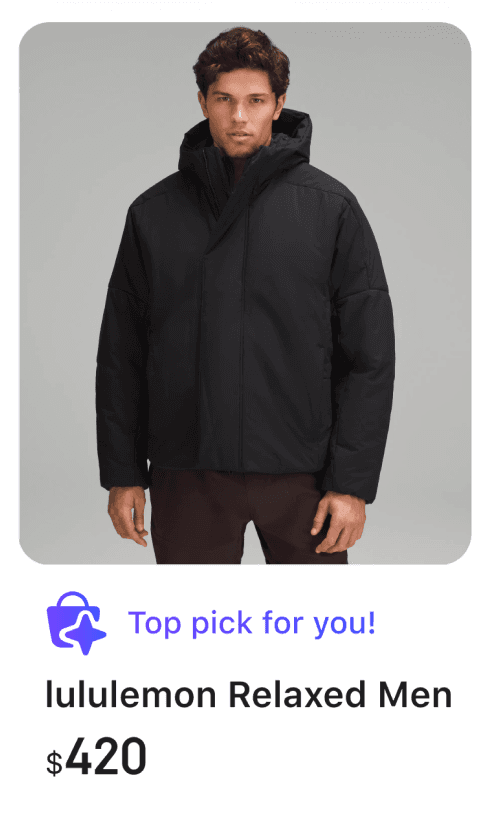
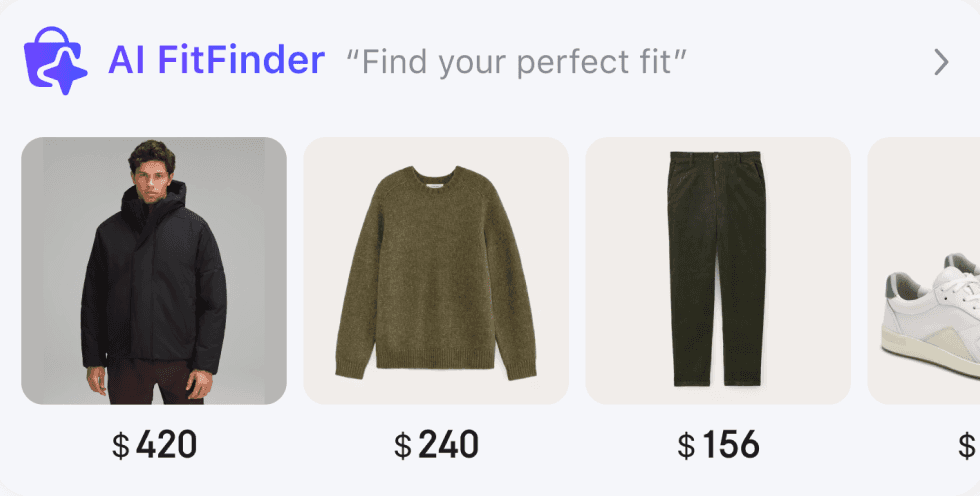
Recommendation Drivers
1
Fit preferences, style goals, and clothing choices
2
Regional and seasonal style trends
3
New arrivals from preferred brands or categories
4
Outfit pairings based on past purchases
5
Personalized offers on favorite brands or lower-priced alternatives
6
Time-, season-, or climate-based recommendations
Customer-Facing Messaging
“Selected for Your Fit”
“Your Top Picks”
“Trending in Your Area”
“Popular Looks Around You”
“Just In from Your Brands”
“New Arrivals You’ll Value”
“Complete Your Look”
“Made to Match What You Own”
“Your Brands, Now on Sale”
“Exclusive Offer Applied”
“Season-Ready Picks”
“Right for the Occasion”
Related Works